
Introduction

I know how frustrating oily skin can be. Some mornings, my skin looks fresh after washing, but within a few hours, my forehead and nose start looking shiny again. Enlarged-looking pores, frequent breakouts, and makeup that doesn’t stay in place can make things even more annoying.
But having oily skin doesn’t mean your skin is unhealthy. Oily skin is common and manageable when you understand what is causing it and choose a simple routine that works for you.
In this guide, we’ll look at the most common oily skin problems in women, what causes them, and simple ways to manage excess oil. From choosing the right skincare products to avoiding common mistakes, these tips can help your skin look fresh, balanced, and healthy without trying to remove every bit of natural oil.
Table of Contents
What Is Oily Skin?
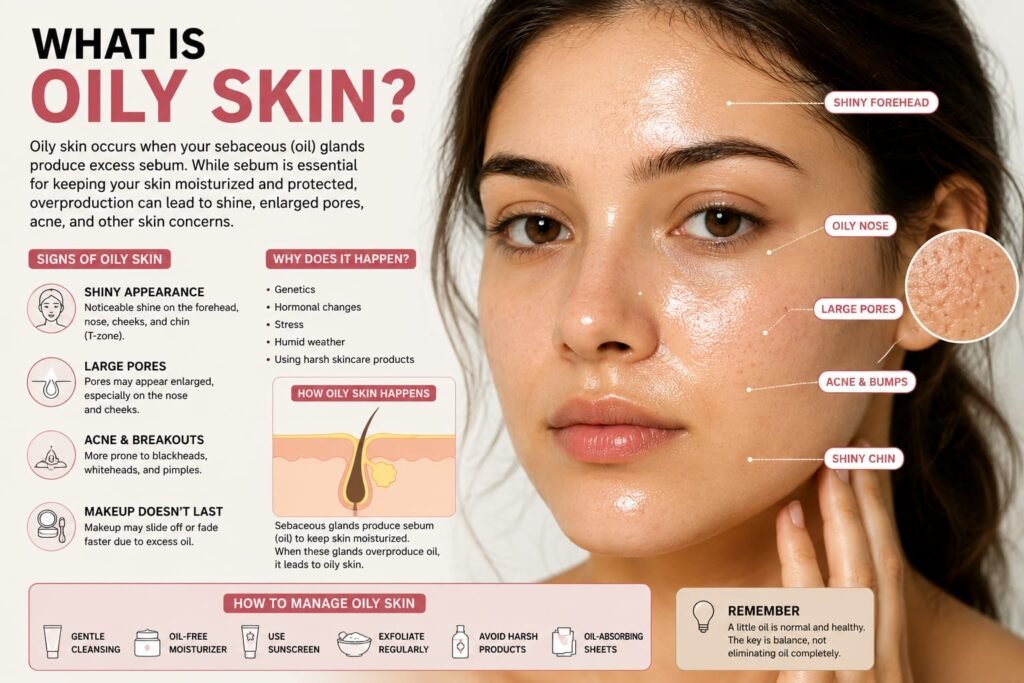
Oily skin happens when the skin produces more sebum (natural oil) than it needs. Sebum is not bad—it helps protect the skin and keeps it from becoming too dry. The problem starts when there is too much of it, which can make the face look shiny or greasy.
I’ve noticed that oily skin can also make pores look more noticeable and cause makeup to wear off faster. The good news is that you don’t need to remove all the natural oil. The goal is to keep oil under control while maintaining healthy skin moisture.
How Oily Skin Usually Looks
Oily skin can look different from person to person, but some common signs include:
- Shiny appearance, especially on the forehead, nose, and chin
- A greasy feeling a few hours after cleansing
- Pores that look larger or more visible
- Makeup that fades, separates, or becomes shiny quickly
If you experience some of these signs, you may have oily skin. A simple and consistent skincare routine can help manage excess oil without making your skin feel dry or uncomfortable.
Common Oily Skin Problems in Women
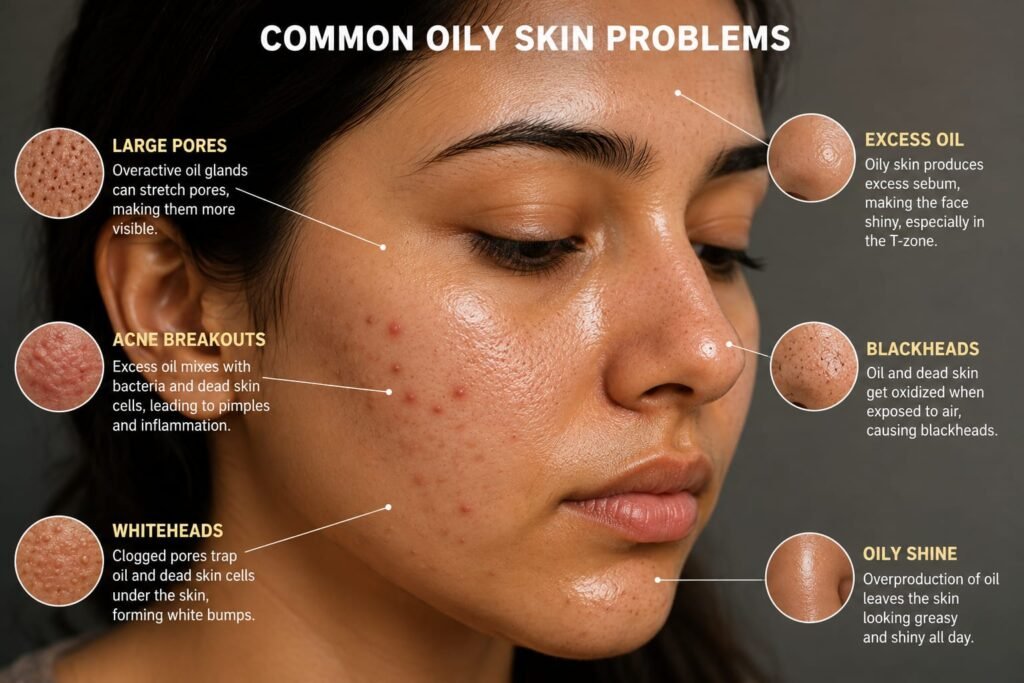
Oily skin can come with a few common problems. I’ve noticed that some days are easier than others, but understanding these concerns makes it much easier to manage them.
1. Excess Facial Oil
The most common problem is too much facial oil. The forehead, nose, and chin usually become greasy first because these areas tend to produce more sebum.
A gentle cleanser and lightweight skincare products can help keep excess oil under control without making the skin feel dry.
2. Enlarged-Looking Pores
When there is excess oil and buildup around pores, they can appear larger or more noticeable.
You cannot permanently remove pores, but keeping your skin clean and using suitable products can help them look less noticeable.
3. Frequent Breakouts
Excess oil can mix with dead skin cells and contribute to clogged pores, which may lead to pimples and breakouts.
Keeping a simple skincare routine and avoiding heavy products can help. Try not to pick or squeeze active breakouts.
4. Blackheads and Whiteheads
Blackheads and whiteheads are common concerns for oily skin. They can develop when pores become clogged with oil and dead skin cells.
Gentle cleansing and suitable pore-cleansing ingredients can help manage these concerns.
5. Makeup Melting or Fading
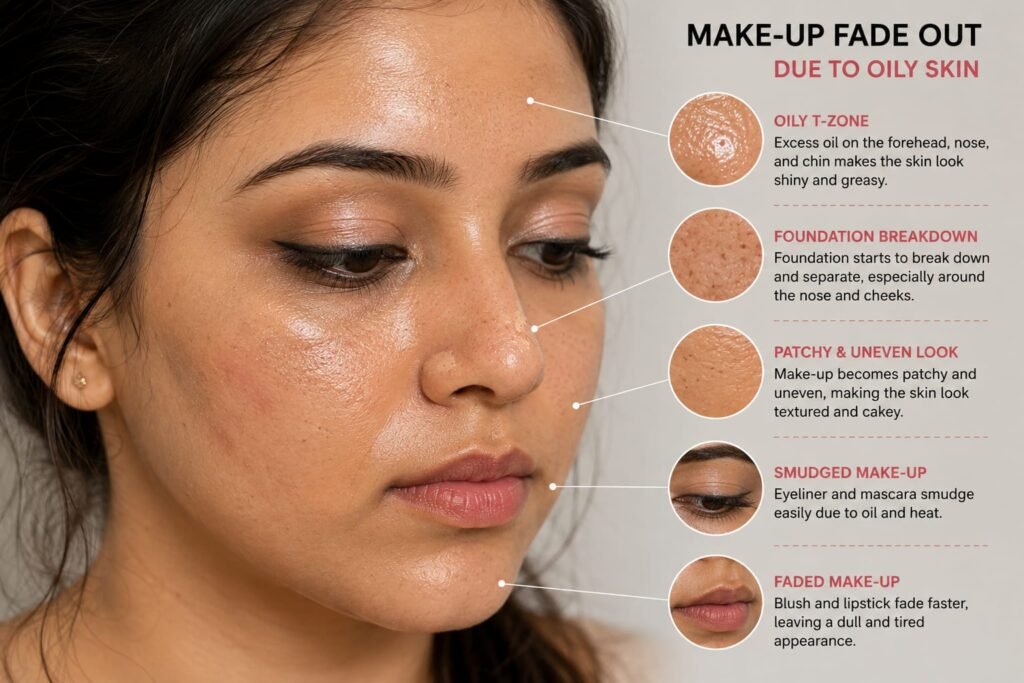
If you have oily skin, foundation may start looking shiny, separate, or fade after a few hours.
Using a lightweight primer, thin foundation layers, and a little setting powder can help your makeup stay fresh for longer.
6. Shiny T-Zone
The forehead, nose, and chin are often the oiliest areas of the face. This is known as the T-zone.
Instead of repeatedly washing your face, use blotting papers during the day and choose lightweight skincare and makeup products.
What Causes Oily Skin in Women?
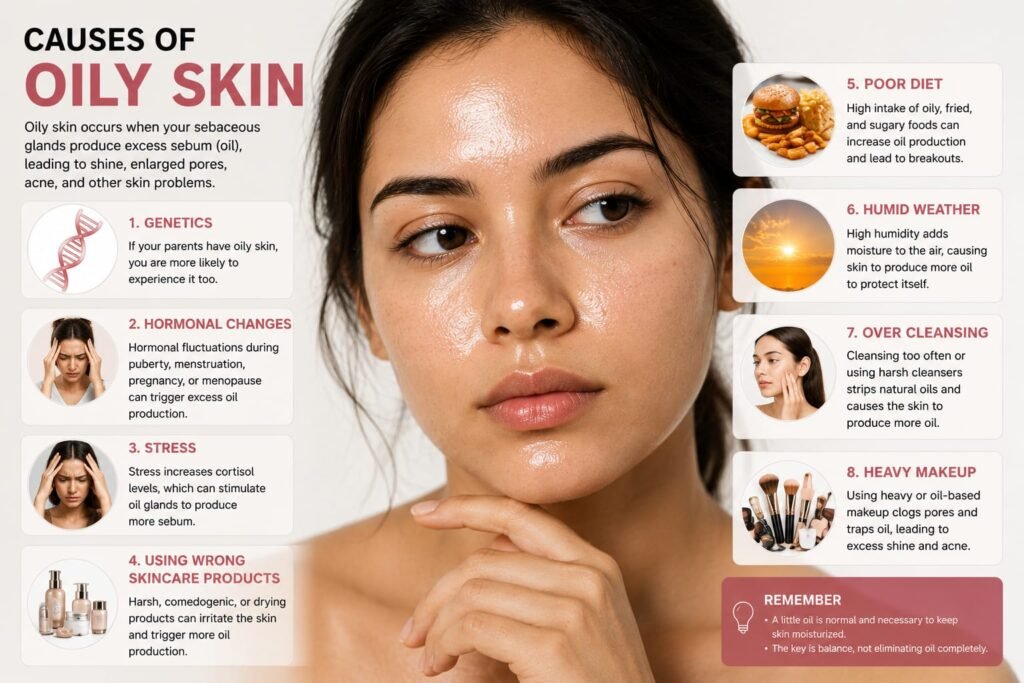
There can be several reasons why women experience oily skin. Sometimes it is simply your natural skin type, while other times lifestyle, hormones, or skincare products can play a role.
1. Hormonal Changes
Hormones can affect how much oil your skin produces. During puberty, monthly hormonal changes, pregnancy, or other life stages, you may notice that your skin becomes oilier than usual.
2. Genetics
Sometimes oily skin simply runs in the family. If your parents or close family members have oily skin, you may be more likely to experience it too.
3. Stress
Stress can also affect your skin. During stressful periods, you may notice more oil, breakouts, or other changes.
I’ve found that getting enough sleep, drinking enough water, and taking time to relax can make my overall skincare routine easier to manage.
4. Hot and Humid Weather
Warm and humid weather can make oily skin feel even oilier. Sweat mixes with natural oil, leaving the face looking shiny and greasy.
Keeping your skincare routine lightweight can help your skin feel more comfortable during hot weather.
5. Using the Wrong Skincare Products
Heavy creams or very harsh cleansers may not work well for oily skin. Using a cleanser that is too drying can also leave your skin feeling uncomfortable.
Instead, choose lightweight, gentle products that match your skin type and help maintain a healthy balance.
How to Control Oily Skin Naturally?

You don’t need a complicated routine to manage oily skin. I’ve found that a few simple daily habits can make a noticeable difference.
1. Wash Your Face Gently
Cleanse your face twice a day with a gentle cleanser. Avoid scrubbing too hard because it can irritate the skin and make it feel dry.
2. Don’t Skip Moisturizer
Oily skin still needs hydration. Choose a lightweight, oil-free or gel moisturizer to keep your skin comfortable without feeling heavy.
3. Use Sunscreen Every Day
Always use sunscreen during the day. A lightweight, non-greasy sunscreen can sit more comfortably on oily skin and work well under makeup.
4. Stay Hydrated
Drink enough water throughout the day and include water-rich foods in your diet. Staying hydrated supports your overall skin health.
5. Keep Your Makeup Tools Clean
Dirty brushes and sponges can collect oil, makeup, and dirt. Clean them regularly and avoid sharing your makeup tools with others.
Best Skincare Routine for Oily Skin
I like to keep my oily skin routine simple and consistent. You don’t need a lot of products. The goal is to clean away excess oil while keeping your skin comfortable and hydrated.
Morning Routine
Start your morning with a gentle cleanser to remove overnight oil. Follow it with a lightweight moisturizer and finish with sunscreen.
Simple order:
Cleanser → Moisturizer → Sunscreen
Night Routine
At night, remove your makeup first if you are wearing any. Then cleanse your face gently and apply your usual skincare products. Finish with a lightweight moisturizer.
Simple order:
Makeup remover → Cleanser → Treatment (if needed) → Moisturizer
The most important thing is consistency. A simple routine that you follow every day is usually easier to maintain than using too many products at once.
Ingredients That Can Help Oily Skin
Choosing the right ingredients can make your skincare routine much easier. I prefer simple formulas with ingredients that target excess oil without making my skin feel overly dry.
Salicylic Acid
Salicylic acid can help clean clogged pores and remove excess oil and dead skin cells. It is commonly found in cleansers and treatments made for oily or acne-prone skin.
Niacinamide
Niacinamide is a popular skincare ingredient that can help improve the appearance of oiliness and enlarged-looking pores. It is also useful for supporting the skin barrier.
Hyaluronic Acid
Having oily skin doesn’t mean you don’t need hydration. Hyaluronic acid is a lightweight hydrating ingredient that can help keep skin feeling soft without a heavy, greasy finish.
Clay
Clay is often used in masks because it can absorb excess surface oil. I like using a clay mask occasionally rather than applying it too frequently, especially if my skin feels sensitive or dry.
The key is not to use every ingredient at once. Start with products that match your skin’s needs and introduce new products gradually.
Mistakes Women With Oily Skin Should Avoid

Sometimes oily skin gets worse because of simple skincare mistakes. I’ve learned that doing less can often be better than constantly trying new products.
Washing Your Face Too Often
Washing your face again and again may leave your skin feeling dry and irritated. For most people, twice a day is enough.
Skipping Moisturizer
Oily skin still needs hydration. Skipping moisturizer can leave your skin feeling uncomfortable, so choose a lightweight moisturizer instead.
Scrubbing Too Hard
Avoid harsh scrubs and aggressive rubbing. Gentle cleansing is enough to remove everyday dirt and excess oil.
Using Too Many Products
Using several new products at the same time can make your routine confusing and may irritate your skin. Start with a few basic products and add new ones slowly.
Sleeping With Makeup On
Always try to remove your makeup before bed. Leaving makeup on overnight can leave your skin feeling dirty and may contribute to clogged pores.
Constantly Touching Your Face
Touching your face throughout the day can transfer oil and dirt to your skin. If your face becomes shiny, gently blot the excess oil instead of repeatedly touching or rubbing it.
When Should You See a Dermatologist?
Oily skin is usually manageable with a simple routine, but sometimes it needs professional attention. If you are dealing with persistent or painful acne, severe irritation, or sudden changes in your skin, it may be a good idea to speak with a dermatologist.
Persistent Breakouts
If pimples keep coming back or do not improve with your usual skincare routine, a dermatologist can help you find the right treatment.
Painful or Severe Acne
Deep, painful, or inflamed breakouts should not be ignored. Professional advice can help prevent the problem from becoming worse or leaving lasting marks.
Ongoing Skin Irritation
If your skin stays red, itchy, burning, or irritated, stop using products that may be causing the problem and consider getting professional advice.
Sudden Changes in Oil Production
If your skin suddenly becomes much oilier than usual without an obvious reason, it is worth discussing the change with a healthcare professional.
You don’t have to figure everything out on your own. Getting professional advice can help you understand your skin better and choose a routine that actually suits your needs.
My Simple Oily Skin Routine

After trying different skincare products, I’ve learned that I don’t need a long routine to manage oily skin. Keeping things simple and consistent works much better for me.
Morning Routine
I start my day with a gentle face wash for oily skin to remove excess oil. Then I apply a lightweight moisturizer and finish with sunscreen.
My morning routine:
Cleanser → Moisturizer → Sunscreen
Night Routine
At night, I remove my makeup if I’m wearing any and gently cleanse my face. If I’m using a treatment, I apply it after cleansing and then finish with moisturizer.
My night routine:
Makeup remover → Cleanser → Treatment → Moisturizer
Keep It Consistent
The biggest thing I’ve learned is not to keep changing products. Give your routine time and pay attention to how your skin responds.
You don’t need to completely remove natural oil. The goal is simply to keep excess oil under control while keeping your skin comfortable and hydrated.
Conclusion
Having oily skin can be frustrating, but it doesn’t have to control your skincare routine. Once I understood what was making my skin oily, I found that simple and consistent habits worked much better than using too many products.
The key is to cleanse gently, keep your skin hydrated, use sunscreen, and choose lightweight products that suit your skin type. Ingredients like salicylic acid and niacinamide can also be helpful for managing common oily skin concerns.
Most importantly, don’t try to remove every bit of natural oil from your face. Healthy skin needs some oil. The goal is to control excess oil while keeping your skin balanced and comfortable.
At Beauty Lux Hub, we believe good skincare doesn’t have to be complicated. Pay attention to your skin, be consistent with your routine, and give your products enough time to work.
Frequently Asked Questions About Oily Skin
1. Why is my skin suddenly very oily?
Hormonal changes, stress, hot weather, genetics, and using the wrong skincare products can all make your skin produce more oil than usual.
2. Can oily skin become dry?
Yes. Oily skin can still become dehydrated or dry, especially if you use harsh cleansers or wash your face too often. That’s why moisturizer is still important.
3. Should women with oily skin use moisturizer?
Absolutely. Choose a lightweight, non-greasy moisturizer that feels comfortable on your skin. Skipping moisturizer isn’t a good way to control oil.
4. How many times should I wash oily skin?
For most people, twice a day is enough—once in the morning and once at night. Avoid repeatedly washing your face throughout the day.
5. What is the best ingredient for oily skin?
Ingredients such as salicylic acid and niacinamide are commonly used for oily skin. The best choice depends on your individual skin concerns and how your skin reacts.
6. Can stress cause oily skin?
Stress can affect your skin and may contribute to changes in oil production or breakouts. Getting enough sleep and following a consistent skincare routine can help support overall skin health.
7. How can I stop my face from getting shiny?
Use a gentle cleanser, lightweight moisturizer, and suitable sunscreen. During the day, blot excess oil with blotting papers instead of repeatedly washing your face.