
Introduction
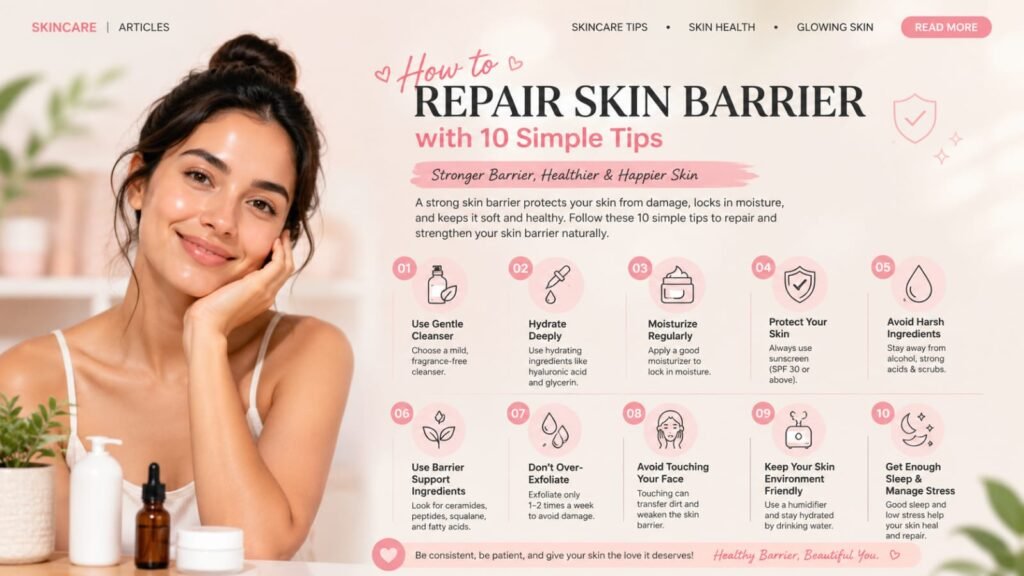
Have you ever noticed that your skin suddenly feels dry, tight, itchy, or irritated, even when you are using your usual skincare products? I’ve experienced this too, and sometimes the problem is not that you need more products. Your skin barrier may simply be damaged.
First of all you have to know about what is skin barrier .The skin barrier is like a protective layer that helps keep moisture inside your skin and protects it from things that can cause irritation. It works like natural ‘shield’ that keeps the good things in and harmful things out .When this barrier becomes weak, your skin can become more sensitive and uncomfortable.
The good news is that you can support your skin barrier with a simple and gentle skincare routine. You don’t need a shelf full of expensive products. In many cases, giving your skin a break from harsh products and focusing on moisture can make a big difference.
In this guide, we’ll explain how to repair skin barrier, what causes damage, which ingredients can help, and the simple mistakes you should avoid.
Table of Contents
What Is the Skin Barrier?

The skin barrier is the outermost layer of your skin. Think of it as a protective shield that helps keep water inside your skin while protecting it from dirt, irritants, and other things that can cause problems.
When your skin barrier is healthy, your skin usually feels soft, comfortable, and hydrated. But when it becomes damaged, you may notice dryness, redness, flaking, or increased sensitivity. But when the skin barrier becomes damaged or weakened , your skin may become dry, tight, red, flaky, irritated or more sensitive than usual.
The skin barrier is made up of skin cells and natural oils called lipids, including ceramides. These help keep the skin’s protective layer strong.
Why Is the Skin Barrier Important?
A healthy skin barrier helps your skin:
- Keep moisture locked in
- Protect itself from irritants
- Stay hydrated and comfortable
- Maintain a smoother appearance
- Handle skincare products better
That’s why learning how to repair your skin barrier is important if your skin has started feeling unusually dry, sensitive, or irritated.
The good news is that you don’t need a complicated routine. Gentle cleansing, regular moisturizing, and daily sunscreen are great places to start. In simple words your skin barrier is like a protective wall around your skin .When the wall is strong , your skin stay hydrated and protective. When it becomes weak or damage, moisture escapes easily and your skin can become dry, irritated and sensitive .
What Does a Damaged Skin Barrier Look Like?
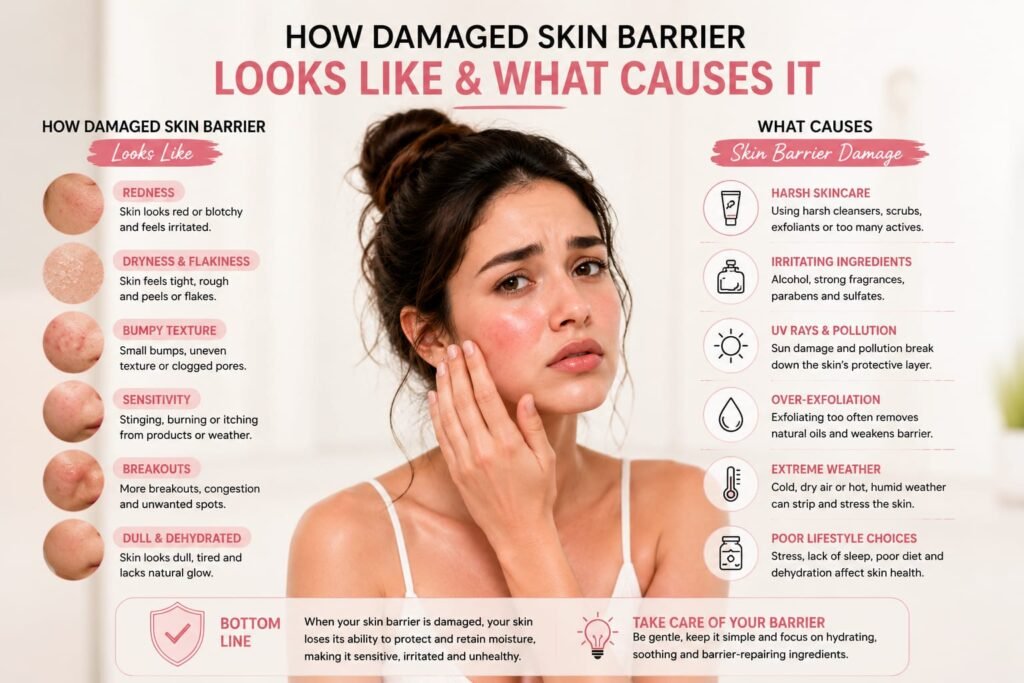
A damaged skin barrier can show up in different ways. Sometimes the signs are easy to notice, while other times your skin may simply feel different from normal.
If your skin suddenly becomes dry, sensitive, or irritated, it may be a sign that your skin barrier needs more gentle care.
Dry and Tight Skin
Your skin may feel tight after washing, even if you normally have oily or combination skin. You may also notice rough or dry patches. Its signs that your skin barrier is damage.
Redness and Irritation
A weak skin barrier can make your skin look red or irritated. Your skin may also become more sensitive to products that you normally use without problems.
Burning or Stinging
If your moisturizer or other skincare products suddenly burn or sting when applied, your skin may be more sensitive than usual. It’s a big red signs that your skin barrier are not protective .
Flaky or Rough Skin
Small flakes, rough patches, or an uneven skin texture can also be signs of a damaged barrier.
If you notice several of these signs at the same time, it’s usually better to simplify your skincare routine instead of adding more products. Give your skin some time to heal naturally and focus on gentle cleansing and moisturizing.
What Causes Skin Barrier Damage?
Your skin barrier can become weak for many reasons. Sometimes we damage it without realizing it by trying too many skincare products or cleansing too aggressively.
Here are some of the most common causes.
Over-Exfoliating
Exfoliation can help remove dead skin cells, but doing it too often can irritate your skin. Using strong scrubs or exfoliating acids too frequently may weaken the skin barrier.
Using Harsh Products
Strong cleansers, irritating ingredients, or products that make your skin feel extremely dry can cause problems. If your face feels tight and uncomfortable after cleansing, your cleanser may be too harsh for you.
Washing Your Face Too Often
Cleaning your face is important, but washing it repeatedly can remove too much of the skin’s natural oils. For many people, cleansing twice a day is enough.
Using Too Many Active Ingredients
Using several strong ingredients at the same time can be too much for your skin. For example, combining multiple exfoliating products with other active treatments may lead to irritation.
Sun and Environmental Damage
Too much sun exposure, cold weather, wind, and dry air can also make your skin feel dry and uncomfortable.
Understanding these causes is an important part of learning how to repair your skin barrier. Sometimes the best first step is simply removing the things that are irritating your skin.
How to Repair Your Skin Barrier? 10 Simple Tips
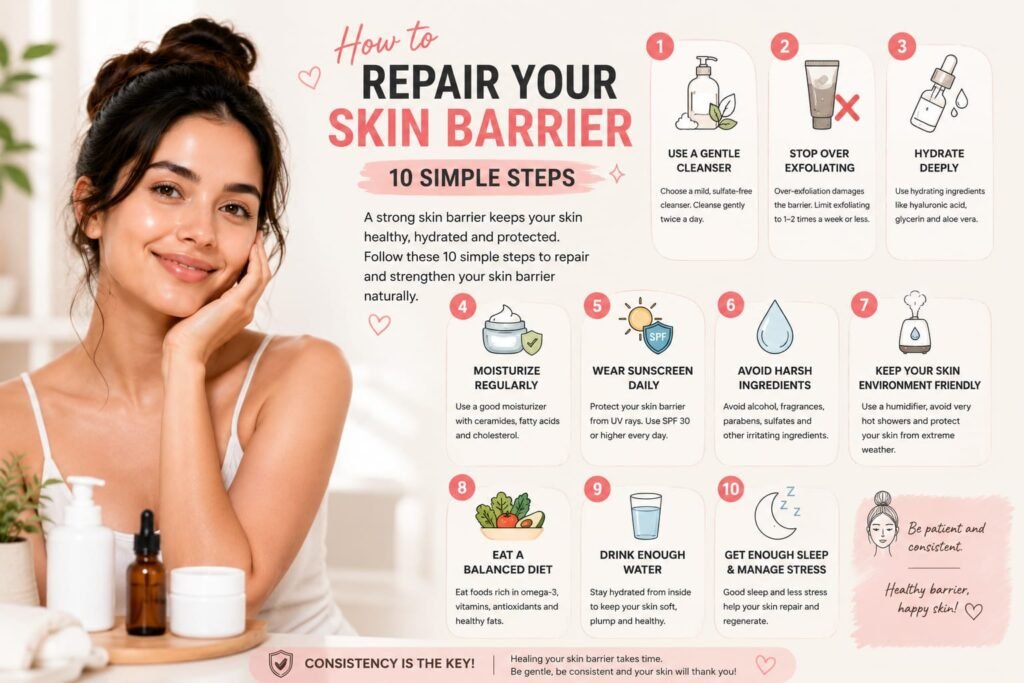
If your skin feels dry, irritated, or unusually sensitive, don’t panic. In many cases, the best approach is to keep your routine simple and gentle. Here are 10 practical tips that can help support your skin barrier.
1. Use a Gentle Cleanser
Choose a mild cleanser that removes dirt and excess oil without leaving your skin feeling tight. Avoid very harsh soaps or cleansers that make your face feel dry after washing.
2. Stop Over-Exfoliating
Give your skin a break from frequent scrubs and strong exfoliating acids if your barrier is irritated. Once your skin feels comfortable again, you can slowly add exfoliation back if needed.
3. Use a Good Moisturizer
Moisturizer is one of the most important steps when learning how to repair skin barrier. Look for a formula that helps your skin stay hydrated and comfortable.
4. Look for Ceramides
Ceramides are natural fats found in the skin. Skincare products containing ceramides can help support the skin barrier and reduce moisture loss.
5. Keep Your Routine Simple
You don’t need ten different products. For a while, focus on the basics: cleanser, moisturizer, and sunscreen. This gives your skin fewer things to react to.
6. Use Sunscreen Every Day
Sun exposure can make irritated skin feel worse. Apply a broad-spectrum sunscreen during the day and follow the product’s instructions for reapplication.
7. Avoid Very Hot Water
Hot water can leave your skin feeling dry. Use lukewarm water when washing your face and avoid taking very hot showers for long periods.
8. Give Your Skin Time to Recover
Don’t expect your skin to feel normal overnight. Be patient and avoid constantly changing products. A consistent, gentle routine is usually a better approach.
9. Stay Hydrated and Eat a Balanced Diet
Drinking enough water and eating a balanced diet supports your overall health. Include a variety of vegetables, fruits, whole grains, protein, and healthy fats in your meals.
10. Introduce New Products Slowly
Once your skin feels better, don’t add several new products at once. Introduce one product at a time so you can see how your skin responds.
The main idea is simple: protect, hydrate, and don’t irritate your skin unnecessarily.
Best Ingredients for a Healthy Skin Barrier
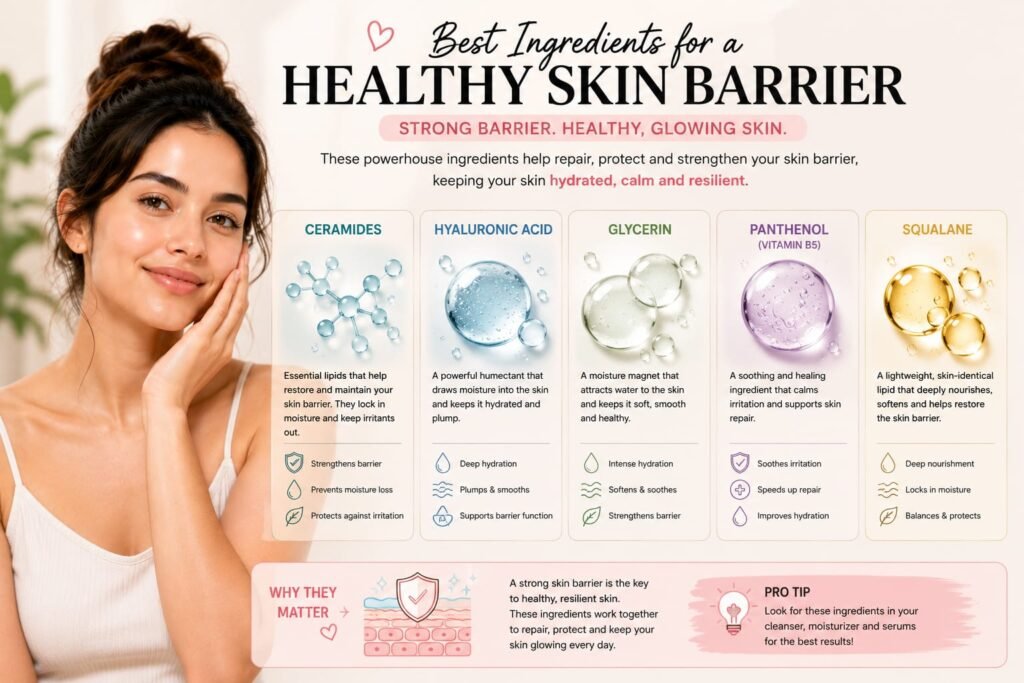
When choosing skincare products, I always think it’s better to focus on simple, gentle ingredients rather than buying too many products. Some ingredients are especially useful for keeping the skin hydrated and supporting the skin barrier.
1. Ceramides
Ceramides are one of the most popular ingredients for barrier care. They help support the skin’s natural protective layer and can help reduce moisture loss.
2. Hyaluronic Acid
Hyaluronic acid is a hydrating ingredient that helps attract and hold water in the skin. It can help your skin feel softer and more comfortable, especially when it feels dry.
3. Glycerin
Glycerin is another simple moisturizing ingredient. It helps draw water toward the skin and is commonly found in gentle moisturizers and cleansers.
4. Panthenol
Panthenol is often used in skincare products designed to soothe and moisturize the skin. It can be a helpful choice when your skin feels dry or uncomfortable.
5. Squalane
Squalane is a lightweight moisturizing ingredient that can help soften the skin and reduce the feeling of dryness without necessarily feeling heavy.
You don’t need to use all of these ingredients together. When your skin barrier is irritated, I prefer keeping the routine simple and gentle and choosing products that make my skin feel comfortable.
Skincare Routine for a Damaged Skin Barrier
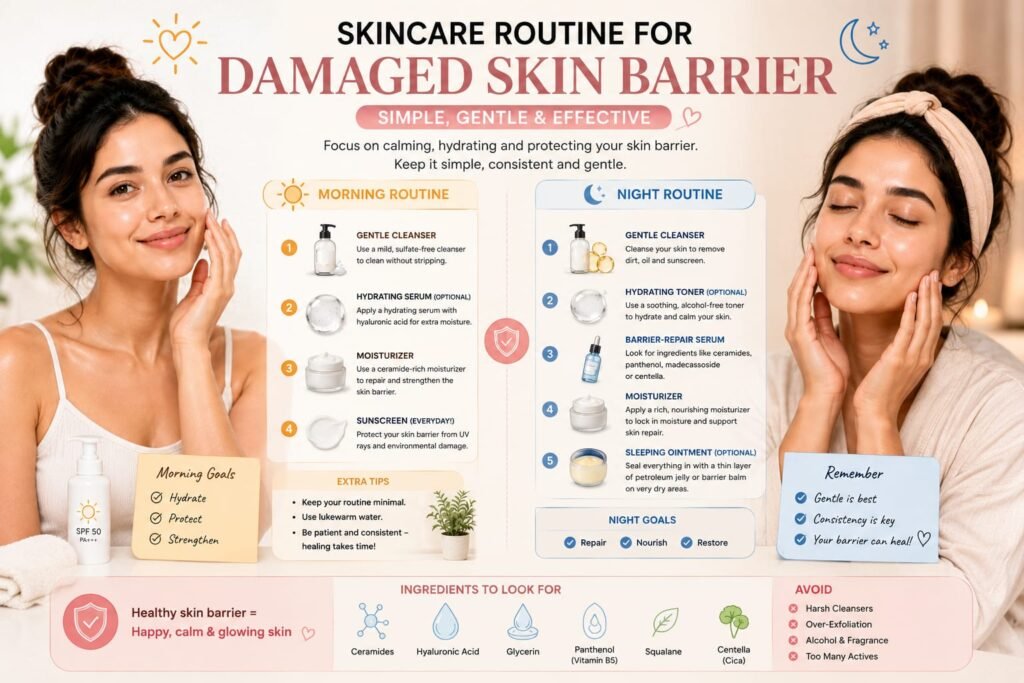
When your skin barrier is damaged, this is not the best time to experiment with lots of new products. I prefer keeping the routine short, gentle, and focused on hydration.
Simple Morning Routine
Start your morning with a gentle cleanser. If your skin feels very dry, you may not need a strong cleanse.
Next, apply a gentle moisturizer to help keep your skin hydrated. Finish with a broad-spectrum sunscreen before going outside.
Morning routine:
Cleanser → Moisturizer → Sunscreen
Simple Night Routine
At night, remove makeup and sunscreen if you have been wearing them. Clean your face gently and follow with a moisturizer.
If your skin is irritated, you may want to pause strong treatments such as exfoliating acids or other products that cause stinging until your skin feels comfortable again.
Night routine:
Makeup remover → Gentle Cleanser → Moisturizer
Keep Your Routine Consistent
The biggest mistake is changing your routine every few days because you don’t see instant results. Give your skin time to recover.
For now, focus on cleaning gently, adding moisture, and protecting your skin from the sun. Once your skin feels healthy and comfortable again, you can slowly bring other products back into your routine.
Mistakes to Avoid While Repairing Your Skin Barrier
When your skin barrier is damaged, it can be tempting to try everything at once. But this can sometimes make your skin feel even worse. Here are some common mistakes I would avoid.
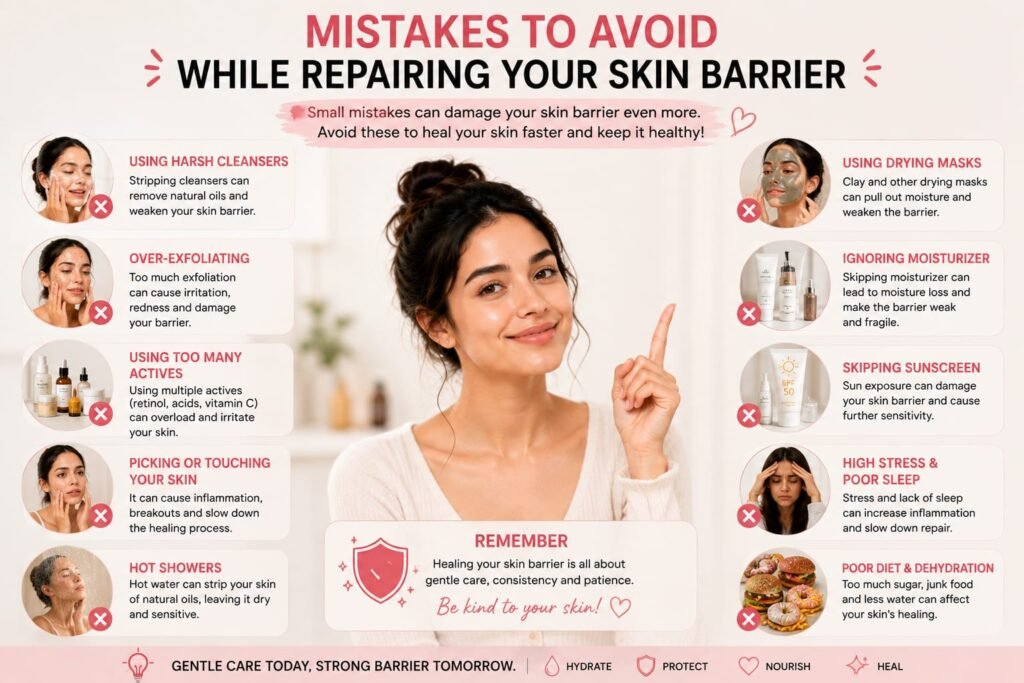
Using Too Many Products
Adding several new serums, masks, and treatments at once can irritate sensitive skin. Keep your routine simple and gentle while your skin recovers.
Exfoliating Too Often
Scrubs and exfoliating acids can be useful, but they may be too strong for an already irritated barrier. Take a break from frequent exfoliation until your skin feels comfortable.
Ignoring Sunscreen
Sun exposure can make skin irritation and dryness worse. Apply broad-spectrum sunscreen every morning and reapply as directed when spending time outdoors.
Using Very Hot Water
Hot water can leave your skin feeling dry and tight. Use lukewarm water instead when washing your face or showering.
Picking or Rubbing Your Skin
Try not to scratch, pick, or rub irritated areas. This can cause more irritation and make it harder for your skin to recover.
Changing Products Too Quickly
Don’t switch products every few days. Give your routine some time and pay attention to how your skin feels.
Remember, when you’re learning how to repair your skin barrier, patience is important. Sometimes the best skincare step is simply doing less and giving your skin a chance to recover.
How Long Does It Take to Repair the Skin Barrier?
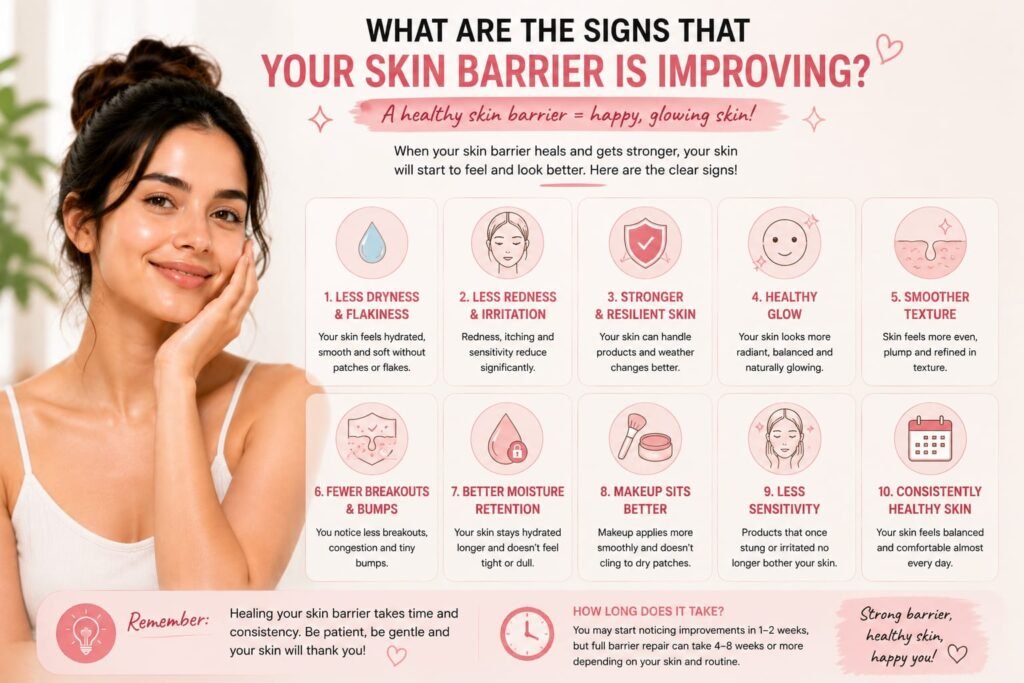
There is no exact time for everyone. It depends on how damaged your skin is and what caused the irritation.
If the problem is mild, your skin may start feeling more comfortable after simplifying your routine and using gentle, moisturizing products. More serious or ongoing irritation can take longer.
The most important thing is to be patient and consistent. Avoid adding strong products just because you want faster results.
Signs Your Skin Barrier Is Improving
You may notice that:
- Your skin feels less tight after cleansing.
- Dry or flaky areas start to improve.
- Your skin feels softer and more comfortable.
- Products no longer sting as much.
- Redness and irritation become less noticeable.
If your skin continues to burn, itch, become very red, or worsen despite simplifying your routine, it’s better to speak with a dermatologist.
For me, the biggest lesson is that repairing the skin barrier isn’t about finding one miracle product. It’s about gentle care, moisture, protection, and giving your skin enough time to recover.
When Should You See a Dermatologist?
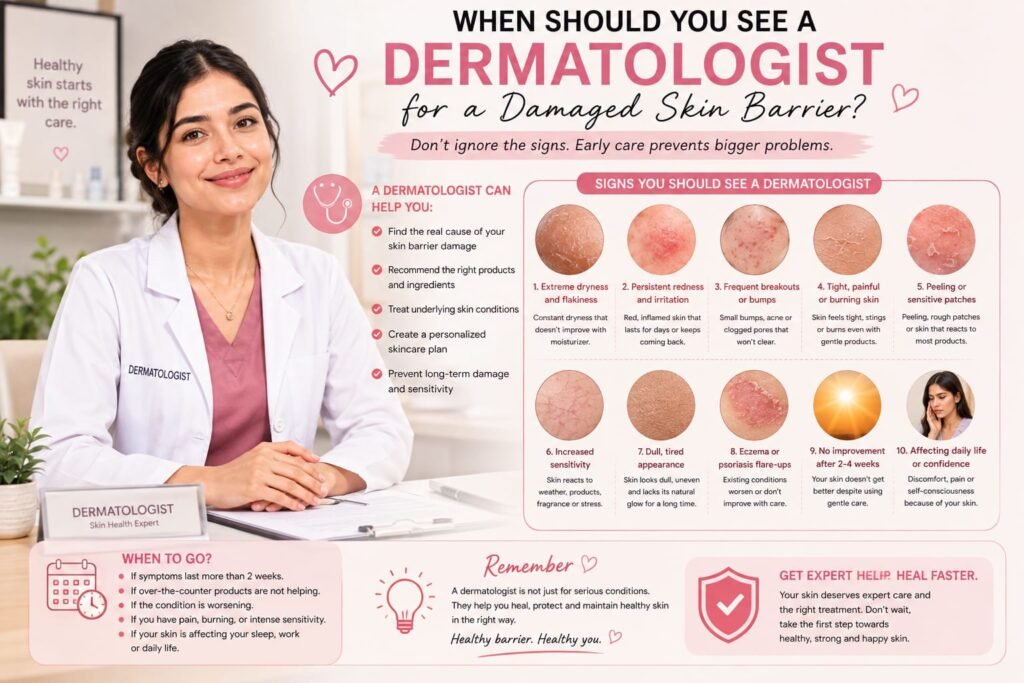
Most mild skin barrier problems can improve with a gentle routine, but sometimes professional help is the better choice. If your skin keeps getting worse or doesn’t improve, don’t keep trying random products.
Your Skin Stays Red or Irritated
If your face remains red, itchy, swollen, or uncomfortable, a dermatologist can help identify what may be causing the problem.
Products Keep Burning or Stinging
If even gentle skincare products cause strong burning or stinging, stop using products that irritate your skin and consider getting professional advice.
You Have Severe Dryness or Cracking
Very dry, cracked, or painful skin may need more than a basic skincare routine.
Your Skin Isn’t Improving
If you have simplified your routine and your skin still doesn’t improve, a dermatologist can recommend appropriate treatment.
Remember, everyone’s skin is different. Don’t feel pressured to fix everything yourself. Getting professional advice is often the safest option when skin problems are persistent or severe.
Conclusion
Learning how to repair your skin barrier doesn’t have to be complicated. In many cases, your skin needs fewer products, not more. A gentle cleanser, a good moisturizer, and daily sunscreen can be a great starting point.
Try to avoid over-exfoliating, harsh products, hot water, and using too many active ingredients at once. Give your skin time to recover and introduce new products slowly when your skin feels comfortable again.
Remember, a healthy skin barrier helps your skin stay hydrated, soft, and protected. Everyone’s skin is different, so pay attention to how your skin reacts rather than following every skincare trend.
At Beauty Lux Hub, we believe that good skincare should be simple and easy to follow. Be patient with your skin, stay consistent, and give it the gentle care it needs.
Frequently Asked Questions About Skin Barrier Repair
How can I repair my skin barrier quickly?
There is no instant fix. The best approach is to keep your routine simple, use a gentle cleanser, apply moisturizer, and protect your skin with sunscreen. Avoid harsh products and over-exfoliation while your skin recovers.
Can I use skincare products when my skin barrier is damaged?
Yes, but keep your routine gentle. Focus on cleanser, moisturizer, and sunscreen. Avoid products that cause burning, stinging, or irritation.
Are ceramides good for the skin barrier?
Yes. Ceramides are naturally found in the skin and are commonly used in moisturizers to support the skin’s protective barrier.
Should I stop using exfoliators?
If your skin is irritated, it is usually best to take a break from strong exfoliators and scrubs. Once your skin feels comfortable again, you can slowly reintroduce them if needed.
Can oily skin have a damaged skin barrier?
Yes. Oily skin can still become dehydrated, dry, or irritated. Using harsh cleansers or washing too often can contribute to barrier problems.
Is moisturizer important for repairing the skin barrier?
Yes. A suitable moisturizer helps keep the skin hydrated and comfortable. Look for gentle formulas with ingredients such as ceramides, glycerin, or hyaluronic acid.
How do I know if my skin barrier is healing?
Your skin may feel less tight, less dry, and less irritated. You may also notice less flaking and greater comfort after applying skincare products.
Can I wear makeup while repairing my skin barrier?
You can, but if your skin is irritated, it’s better to keep makeup light and avoid products that cause discomfort. Always remove makeup gently before going to bed.