
Introduction
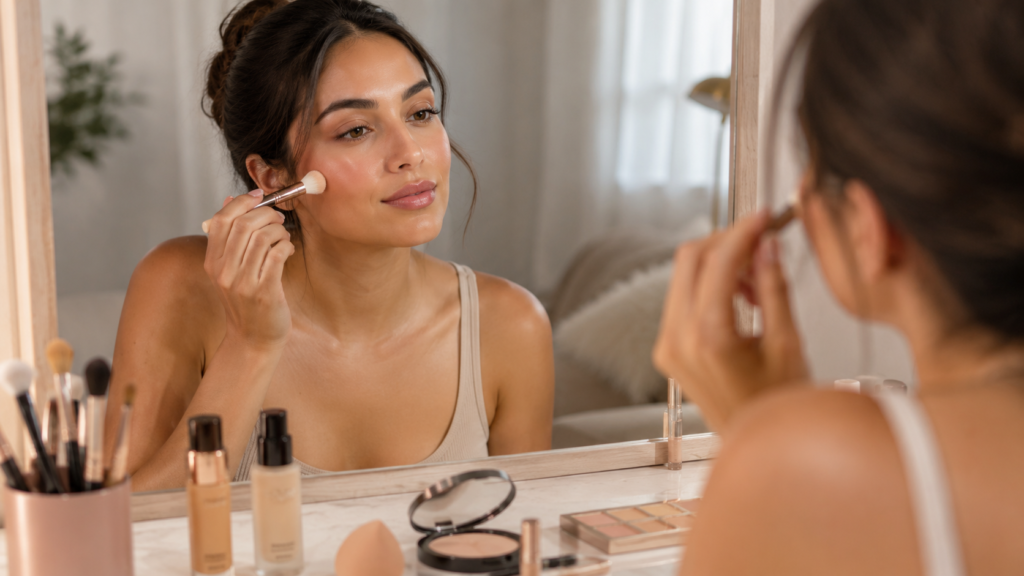
If you have oily skin, you probably know how frustrating it can be when your makeup looks perfect in the morning but starts getting shiny or patchy after a few hours. I’ve had those days when my foundation looked fresh when I first applied it, only to notice extra shine around my nose, forehead, and cheeks later. It can be tempting to keep adding powder, but that can sometimes make the makeup look heavy and cakey.
Over time, I’ve learned that the key is not to fight oily skin but to work with it. The right skin preparation, lightweight products, and a few simple makeup techniques can make a big difference.
In this guide, I’m sharing 15 makeup tips for oily skin that can help your makeup stay fresh, smooth, and comfortable for longer. You don’t need a huge collection of products either. With a few smart changes to your routine, you can create a long-lasting, natural-looking makeup look without constantly worrying about shine.
Table of Contents
1. Start With a Clean Face
Use a Gentle Cleanser
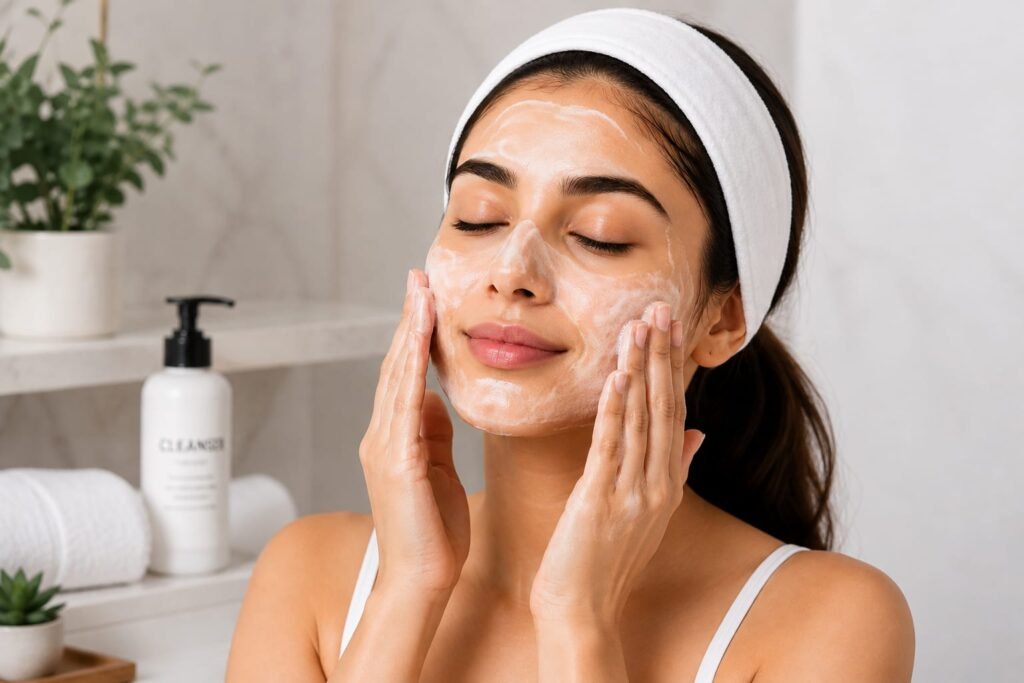
Before applying makeup, always start with a clean face. Use a gentle cleanser to remove excess oil, dirt, and leftover skincare products.
I avoid harsh cleansers because they can make my skin feel dry and uncomfortable. A clean, fresh base helps makeup apply more smoothly and evenly.
2. Don’t Skip Moisturizer
Choose a Lightweight Formula
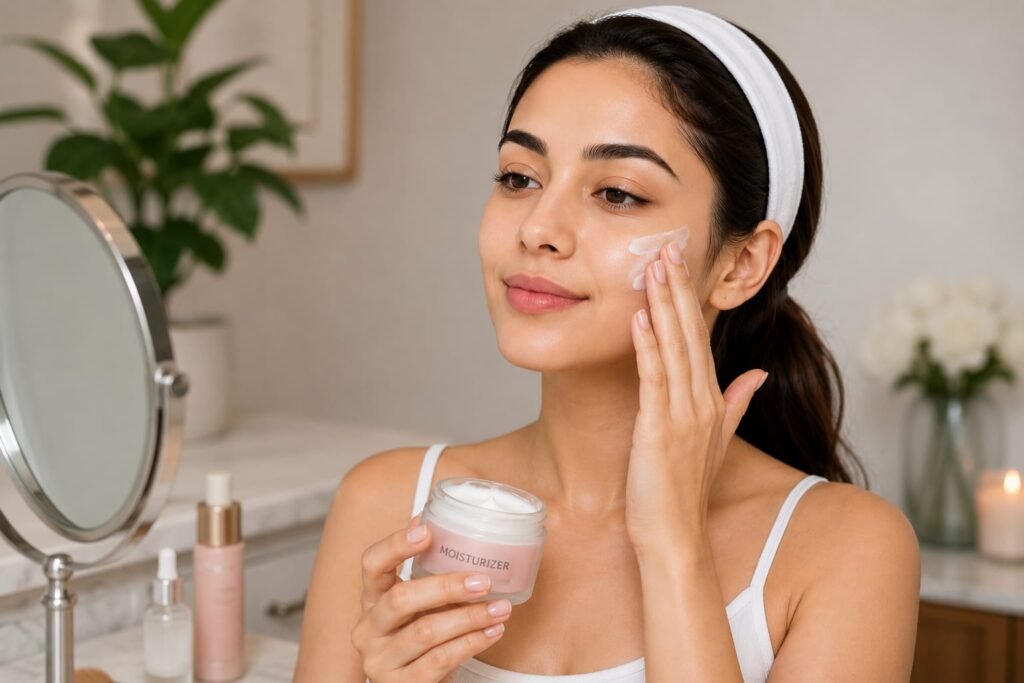
Even if your skin is oily, it still needs moisture. I prefer using a lightweight, oil-free or gel-based moisturizer before makeup.
It helps keep the skin comfortable and creates a smoother base for foundation. Just apply a thin layer and give it a few minutes to absorb before moving to the next step.
3. Always Use Sunscreen
Choose a Lightweight Formula
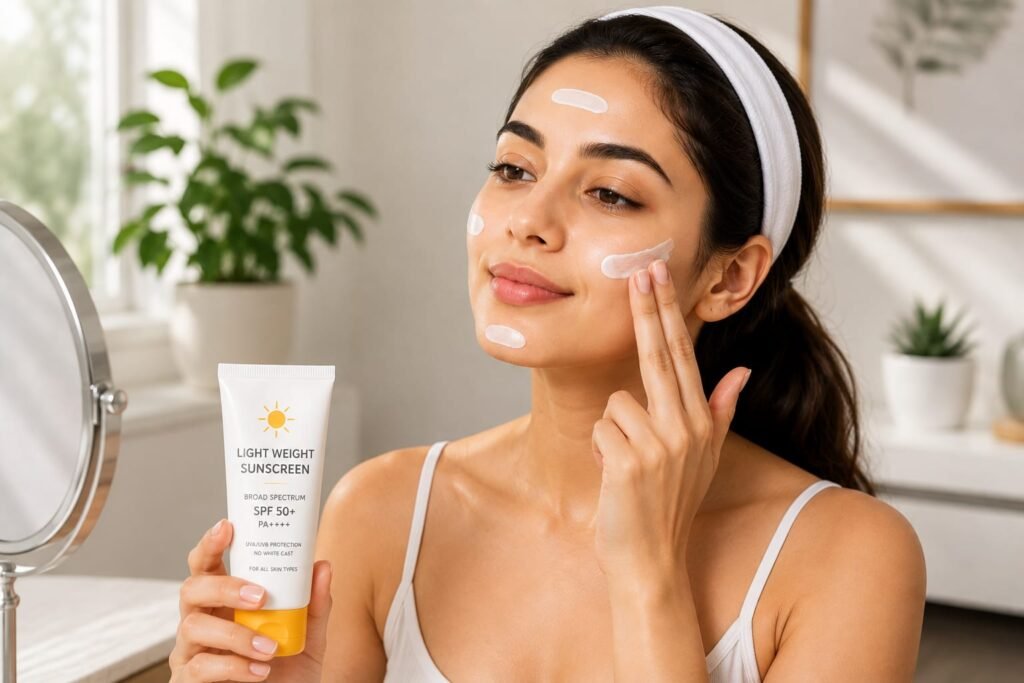
Before makeup, apply a broad-spectrum sunscreen to protect your skin from sun exposure. For oily skin, I prefer a lightweight, non-greasy formula that sits comfortably under makeup.
Apply it after moisturizer and let it settle before moving on to primer and foundation.
4. Choose the Right Primer
Focus on Oily Areas
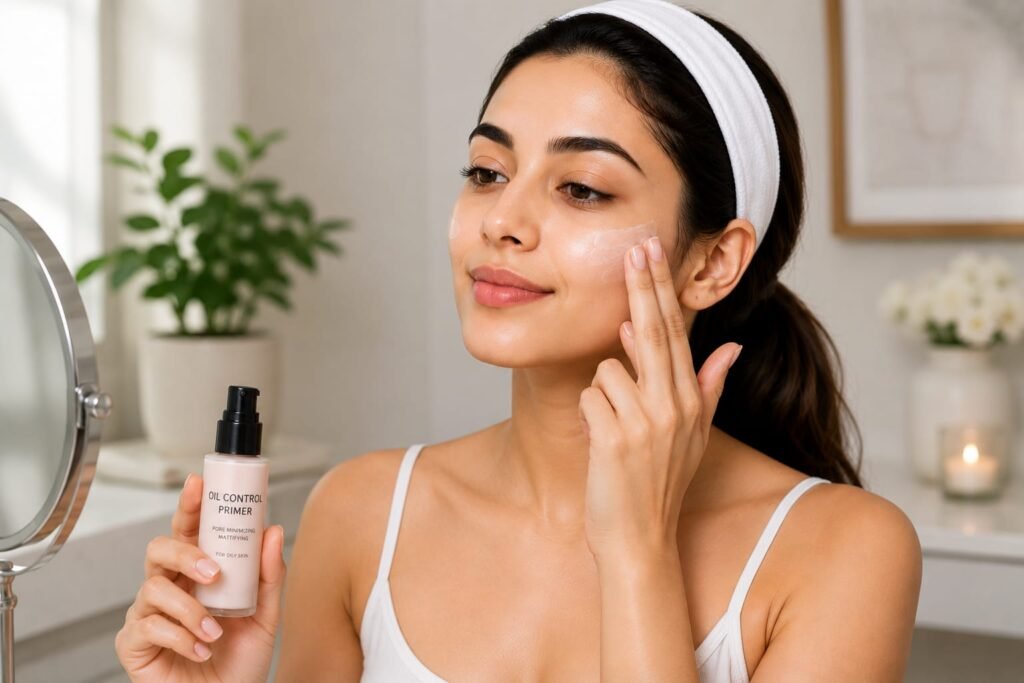
For oily skin, I like using a mattifying or oil-control primer, especially around the forehead, nose, and chin. You don’t need to cover your entire face with a thick layer.
Apply a small amount to the areas where your makeup usually becomes shiny or starts to fade. This creates a smoother base and can help your foundation stay in place for longer.
5. Pick the Right Foundation
Look for Long-Wearing Formulas
For oily skin, I prefer a lightweight, long-wearing foundation that is designed to help control excess shine. Choose a shade that matches your skin tone and start with a small amount.
Apply it in thin layers and blend well. This gives a smoother finish without making the skin look heavy or cakey.
6. Apply Foundation in Thin Layers
Build Coverage Gradually
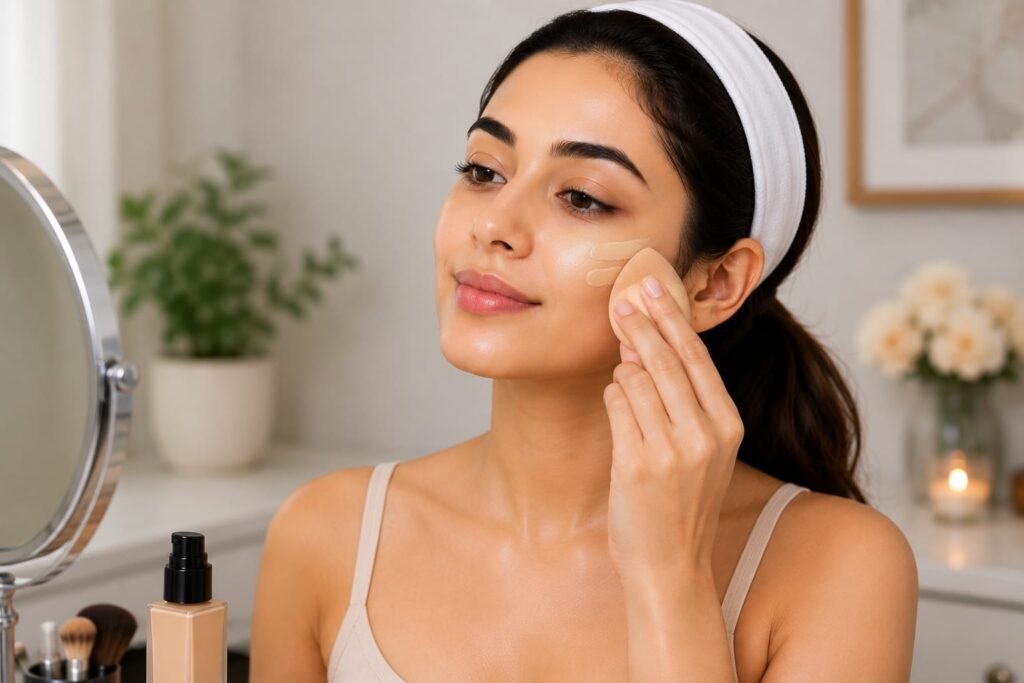
With oily skin, I’ve found that applying too much foundation at once can make the makeup look heavy and cakey later.
Start with a thin layer and blend it evenly using a makeup sponge or brush. If you need more coverage, add a little extra only to the areas that need it. This keeps the finish looking smooth, fresh, and natural while helping your makeup stay comfortable for longer.
7. Use Concealer Only Where Needed
Keep the Coverage Light
I prefer applying concealer only to areas that need extra coverage, such as under the eyes, around redness, or over small blemishes.
Use a small amount and blend it gently with a sponge or brush. Avoid applying too much, as heavy layers can make your makeup look thick or cakey, especially when your skin becomes oily during the day.
8. Set Your Makeup With Setting Powder
Focus on the T-Zone
For oily skin, I like to use a light layer of setting powder on areas that become shiny, especially the forehead, nose, and chin. Avoid applying too much, as it can make the makeup look dry or cakey.
9. Press the Powder Instead of Swiping
Use a Gentle Pressing Motion
Instead of brushing powder back and forth, gently press it onto the skin with a powder puff or sponge. I find this helps set the foundation without moving it around.
Focus mainly on your oily areas and use only a small amount of powder.
10. Choose Powder Blush and Bronzer
Keep the Finish Lightweight

If your skin becomes oily quickly, powder blush and bronzer can be easier to manage throughout the day. Apply a small amount and blend it well.
I prefer building the color gradually rather than applying too much at once. This keeps the makeup looking fresh, balanced, and natural.
11. Keep Your Eye Makeup Simple
Use Long-Wearing Products
If your eyelids get oily, I recommend using an eye primer before eyeshadow. Choose long-wearing eyeshadow and eyeliner to reduce smudging. Keep the eye look simple with neutral shades for an easy everyday finish.
12. Use Waterproof or Long-Wearing Mascara
Prevent Mascara From Smudging
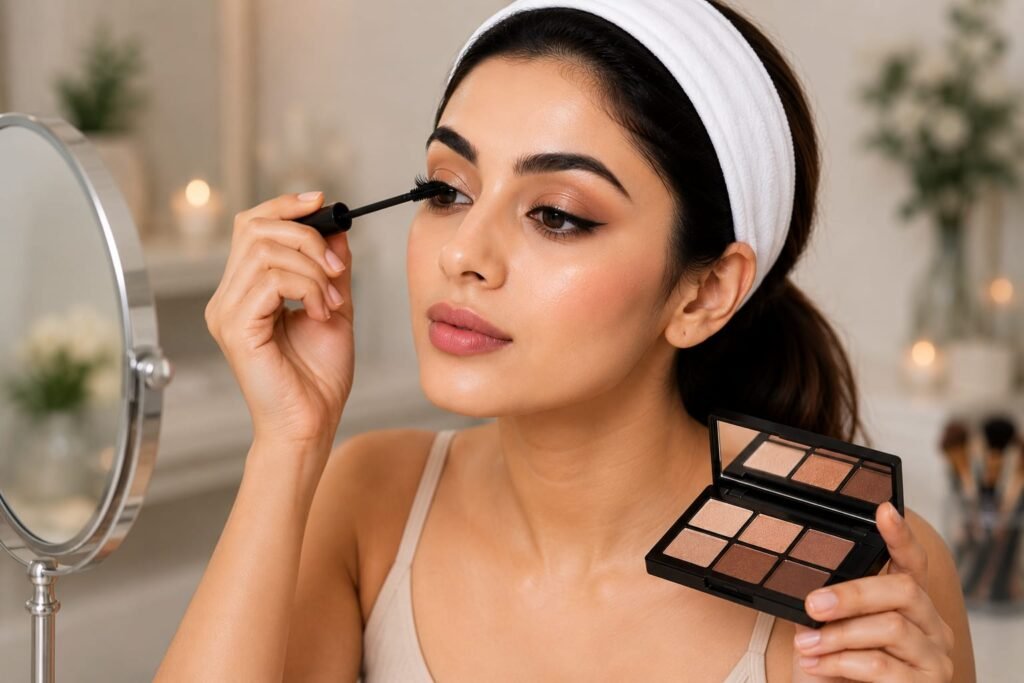
Oily eyelids can sometimes cause mascara to transfer under the eyes. A waterproof or long-wearing mascara can help prevent this.
Apply one or two thin coats instead of using too much product. Let each coat dry before applying another.
13. Keep Blotting Papers With You
Remove Oil Without Removing Makeup
Blotting papers are one of my favorite quick fixes for oily skin. When I notice extra shine during the day, I gently press the paper onto oily areas instead of rubbing.
This removes excess oil while helping keep the makeup underneath intact.
14. Finish With Setting Spray
Choose a Long-Wearing Formula

A good setting spray can be the final step in your makeup routine. Lightly mist it over your face after finishing your makeup and allow it to dry naturally.
For oily skin, choose a formula designed for long-lasting or oil-control wear.
15. Touch Up Makeup the Right Way
Blot First, Then Powder
When your face becomes shiny, don’t immediately add another thick layer of powder. I always recommend blotting away excess oil first.
After that, use a small amount of powder only where needed. This simple trick helps prevent your makeup from becoming cakey or heavy throughout the day.
Common Makeup Mistakes to Avoid With Oily Skin
Using Too Much Powder
Applying too much powder can make your makeup look dry, thick, or cakey. Use a light layer only where you need it.
Skipping Moisturizer
Oily skin still needs hydration. Skipping moisturizer can leave your skin feeling unbalanced and may make your makeup look less smooth.
Applying Too Much Foundation
A thick layer of foundation can break down more noticeably when your skin becomes oily. Start with a thin layer and build coverage gradually.
Touching Your Face Too Often
Touching your face can transfer oil and disturb your makeup. Try to keep your hands away from your face throughout the day.
Adding Powder Without Blotting
If your face becomes shiny, blot the excess oil first and then apply a small amount of powder. This keeps your touch-ups looking much cleaner.
How to Make Makeup Last All Day on Oily Skin
If I want my makeup to last longer, I focus on skin preparation and thin layers rather than using lots of products. Start with a clean face, lightweight moisturizer, sunscreen, and a suitable primer.
Apply foundation and concealer in thin layers, then lightly set oily areas with powder. Avoid putting too much product on the skin because it can become heavy as oil appears throughout the day.
During the day, keep blotting papers with you. Gently press them over shiny areas to absorb excess oil without disturbing your makeup. If needed, follow with a small amount of powder.
Finally, a long-wearing setting spray can help finish the routine. With these simple steps, makeup can stay looking fresher and smoother for much longer.
Conclusion
Having oily skin doesn’t mean you have to give up on a smooth, long-lasting makeup look. I’ve found that the biggest difference comes from preparing the skin properly, choosing suitable products, and avoiding too many layers.
Keep your routine simple: cleanse, moisturize, use sunscreen, apply primer, and build your makeup with thin layers. During the day, blot excess oil before doing any touch-ups.
With a little practice, you can find the products and techniques that work best for your skin and enjoy makeup that looks fresh, comfortable, and polished for longer.
Frequently Asked Questions About Makeup for Oily Skin
How do I stop my makeup from getting oily?
Start with clean, moisturized skin and use a lightweight primer and long-wearing foundation. Set oily areas with a small amount of powder and use blotting papers during the day.
Should I use primer if I have oily skin?
Yes. A mattifying or oil-control primer can help create a smoother base and reduce the appearance of shine. Apply it mainly to areas that become oily.
Is powder or setting spray better for oily skin?
Both can be useful. Setting powder helps control shine, while setting spray can help your makeup stay in place. Using both lightly can work well.
How can I make foundation last longer on oily skin?
Prepare your skin properly, use a suitable primer, and apply foundation in thin layers. Set the T-zone lightly with powder and avoid constantly touching your face.
Should oily skin use moisturizer before makeup?
Absolutely. Oily skin still needs hydration. Choose a lightweight, oil-free or gel moisturizer and allow it to absorb before applying makeup.
How do I touch up oily makeup without making it cakey?
First, blot away excess oil with blotting paper or a clean tissue. Then apply a very small amount of powder only where necessary instead of adding another thick layer.