
Introduction
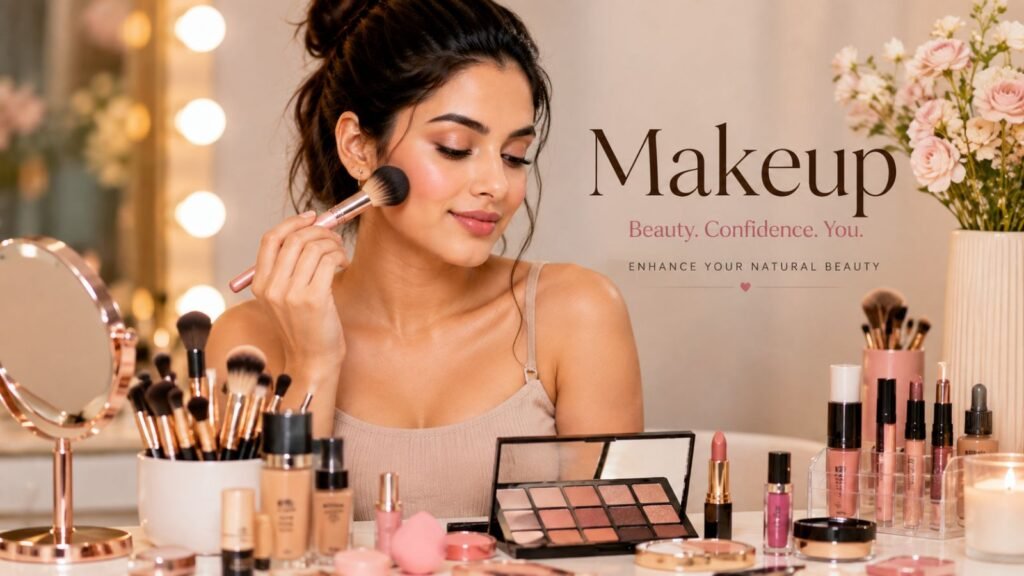
When I first started learning makeup, I honestly thought I needed a lot of products and complicated techniques to create a nice look. But with time, I realized that simple makeup can look just as beautiful when you know how to use the right products in the right order.
If you are a beginner, you don’t need to worry about perfect eyeliner, heavy foundation, or complicated eyeshadow. A basic routine can give you a fresh, natural, and polished look without taking too much time. The key is to start with a few essential products and practice blending them properly.
In this guide, I’m sharing a simple makeup routine for beginners that I would recommend to anyone who is just starting. We’ll go step by step, from preparing the skin to applying foundation, concealer, blush, mascara, and lip color.
I’ll also share some easy tips that helped me avoid common makeup mistakes and make my makeup look more natural. Whether you’re getting ready for college, work, a casual outing, or an everyday look, this routine is easy to follow and can be adjusted according to your personal style.
The goal is not to use a lot of makeup. Its simply about learning how to use a few essential products correctly so you can feel confident and look fresh without spending too much time getting ready .
Table of Contents
Beginner Makeup Routine: Products You Need
If you’re new to makeup, you don’t need a huge collection of products. A few basic makeup essentials are enough to create a fresh, natural-looking everyday look.
1. Moisturizer
Start with a lightweight moisturizer to hydrate your skin and create a smooth base for makeup. That will give you a flowless finish .
2. Sunscreen
For daytime makeup, apply a broad-spectrum sunscreen before makeup. This will protect your skin from direct sunrays .Choose one that feels comfortable under foundation or concealer.
3. Skin Tint or Light Foundation
Beginners can start with a light-coverage skin tint or foundation rather than a heavy formula. It helps even out the complexion while keeping the look natural and give you a simple glow look .
4. Concealer
Use concealer only where you need extra coverage, such as under the eyes or over small blemishes.
5. Setting Powder
A small amount of translucent powder can help reduce unwanted shine and keep makeup in place that stay all day.
6. Blush
A soft pink, peach, or rosy blush instantly adds freshness to the face. Cream blush is especially easy for beginners to blend and give you a shiny blush look .
7. Mascara
Mascara is one of the easiest ways to make your eyes look more defined. One or two coats are usually enough for an everyday look. Makes your eyes look bigger .
8. Lip Product
Finish with a tinted lip balm, lip gloss, or natural lipstick for a perfect look.
9. Makeup Tools
Keep it simple: a makeup sponge or foundation brush, a small powder brush, and a blush brush are enough to get started.
1. Skin Preparation Before Makeup

Before I start applying makeup, I always like to spend a few minutes preparing my skin. I’ve noticed that makeup looks much smoother when the skin is clean, comfortable, and properly moisturized. You don’t need a complicated skincare routine—just a few simple steps can make a noticeable difference.
Cleanse Your Face
Start with a gentle cleanser to remove oil, dirt, and leftover skincare products. Avoid harsh cleansing because overly dry or tight skin can make foundation look patchy and difficult to blend.
Apply Moisturizer
Next, apply a moisturizer that suits your skin type. If your skin is dry, choose a more hydrating formula, while oily skin may feel better with a lightweight gel moisturizer. Give it a few minutes to settle , make you skin hydrate before applying makeup.
Don’t Forget Sunscreen
For daytime makeup, apply broad-spectrum sunscreen that protect your skin from UV rays as the final skincare step before makeup. Let it absorb properly before moving on to primer or foundation.
Once my skin feels hydrated and comfortable, I’m ready to start my makeup routine.
2. Apply Primer for a Smooth Makeup Base
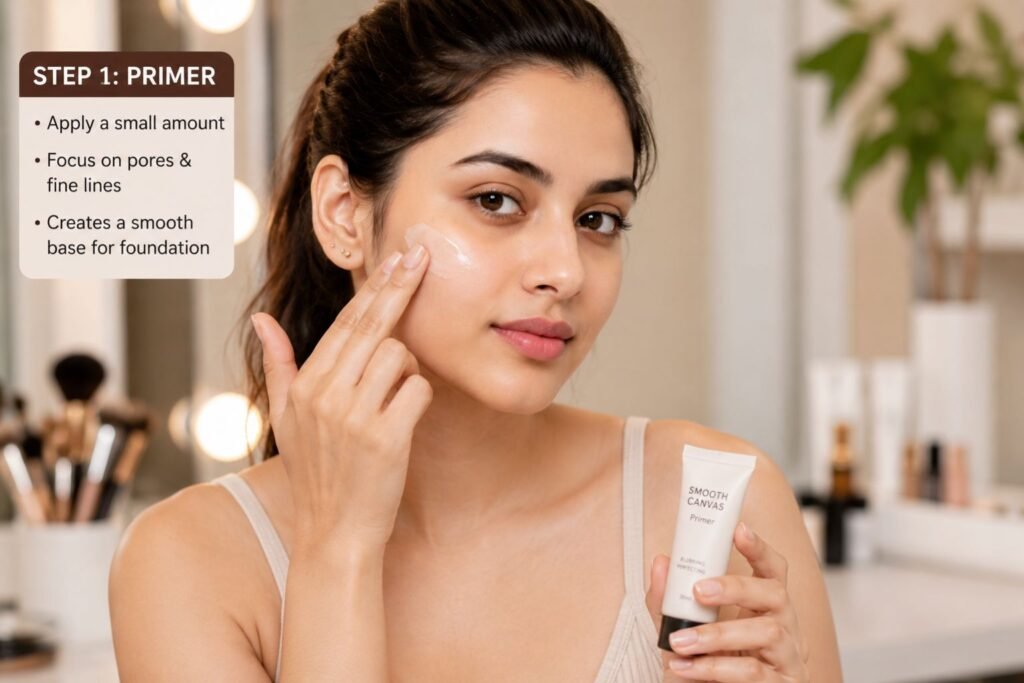
Primer is an optional step, but I find it helpful when I want my makeup to look smoother and last longer. After skincare has settled, apply a small amount of primer to the areas where makeup tends to fade, become oily, or look uneven. It keep your base stay longer .
How to Apply Primer
You don’t need a lot of product. Take a small, pea-sized amount and gently spread it over your face, concentrating on areas such as the nose, forehead, or cheeks. Give it a short time to settle before applying foundation.
If your skin is dry, choose a hydrating primer. For oily skin, a lightweight or mattifying primer may work better. If your skin feels comfortable without primer, you can simply skip this step. But i’ll recommend to apply primer for long lasting makeup look.
3. Apply Foundation or Skin Tint
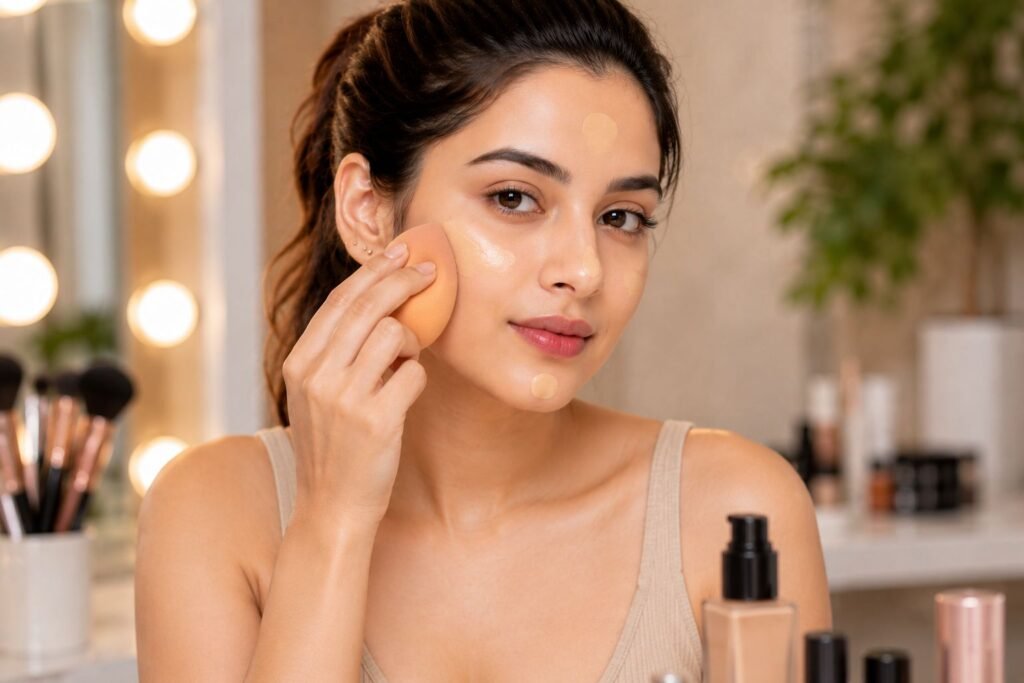
For beginners, I recommend starting with a light or medium-coverage foundation or skin tint. The goal isn’t to completely cover your natural skin but to create an even-looking base that give your face a even looking skin texture .
How to Choose the Right Shade
Always try to choose a shade that closely matches your face and neck. If possible, check the shade in natural daylight rather than relying only on indoor lighting. The shades looks different in daylight or indoor light.
How to Apply Foundation
Start with a small amount and apply it to the center of your face. Then gently blend it outward toward the cheeks, jawline, and hairline using a damp makeup sponge, brush, or clean fingertips. Damp sponge is the best option.
I prefer building coverage gradually instead of applying a thick layer at once. This helps the makeup look more natural and less cakey. Pay extra attention to blending around the nose, jawline, and hairline so there are no visible edges.
If you need additional coverage, add a little more foundation only where necessary. This simple technique gives a fresh everyday finish without making the skin look overly covered. The main thing in foundation process is blending.
4. Apply Concealer for Extra Coverage

After foundation, I use concealer only where I feel I need a little more coverage. For beginners, there’s no need to cover the entire face with concealer. A small amount under the eyes, around redness, or over occasional blemishes is usually enough.
How to Apply Concealer
Choose a concealer that is close to your foundation shade for blemishes. For the under-eye area, you can use a slightly brighter shade if you want a more awake appearance.
Apply a small amount and gently blend it with a damp makeup sponge, brush, or fingertip. I prefer tapping rather than rubbing because it gives me better control and helps keep the coverage where I actually need it. Covering blemishes or dark under-eye give you a more bright and fresh appearance.
5. Add Blush for a Fresh Look
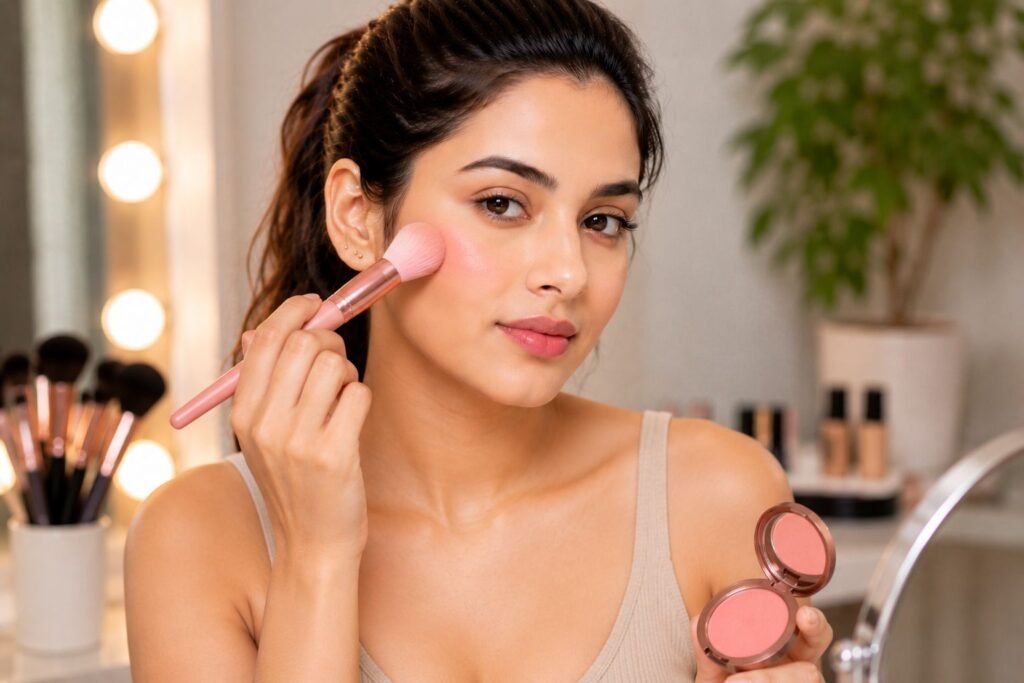
Blush is one of my favorite steps because it can instantly make the face look fresh and healthy. For beginners, start with a small amount and build the color gradually.
Where to Apply Blush
Apply blush to the cheeks and blend it gently upward toward the cheekbones. Peach, soft pink, and rosy shades are easy choices for an everyday makeup look. These shades mostly suits on all skin color.
Cream blush can be particularly beginner-friendly because it is easy to blend with your fingers or a sponge and gives you a shiny fresh look. If you prefer powder blush, use a soft brush and apply a light layer.
6. Shape and Fill Your Eyebrows
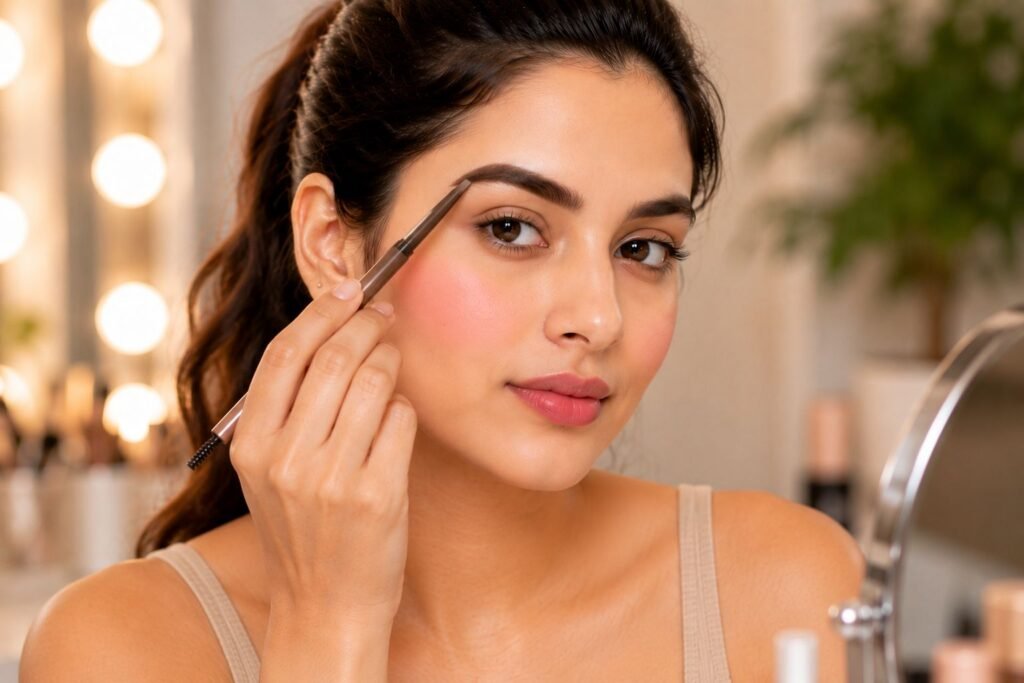
Well-groomed brows can make the entire makeup look more polished. However, I think beginners should avoid making the brows too dark or overly defined. I prefer to keep the brows natural.
Keep Your Brows Natural
Start by brushing your eyebrows upward with a spoolie to remove the extra product that stuck in brows while applying foundation. Then use a brow pencil or powder to lightly fill sparse areas using short, hair-like strokes.
Choose a shade that looks natural with your brows and blend the product afterward. The goal is to enhance your natural shape rather than completely redraw it. Remember to keep the brows natural .
7. Simple Eye Makeup for Beginners
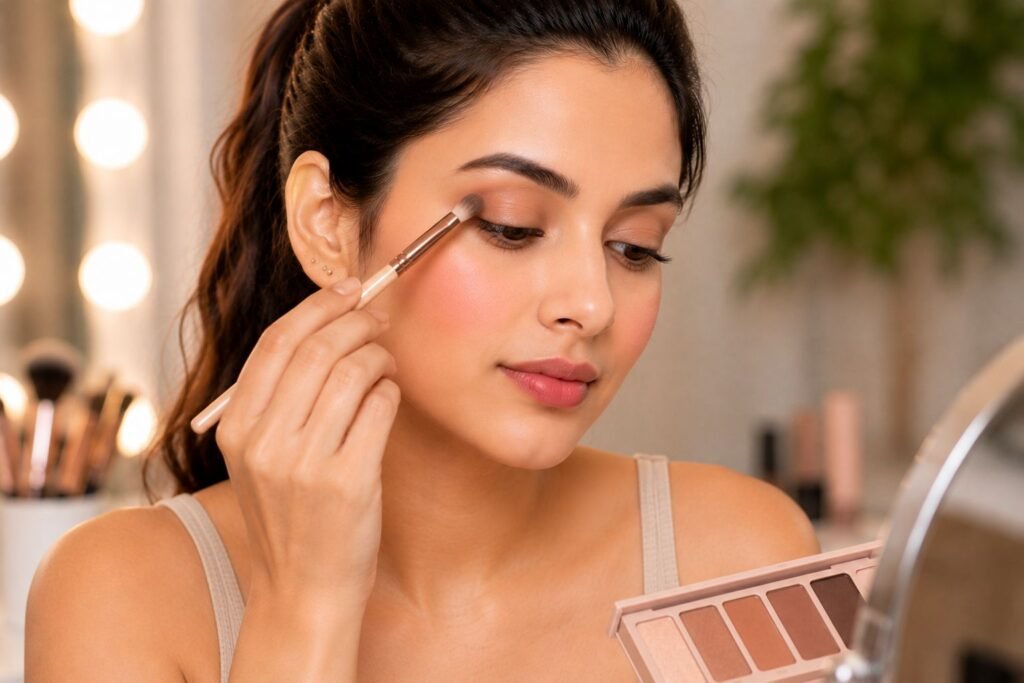
You don’t need complicated eyeshadow techniques to create beautiful eye makeup. When I want a quick everyday look, I usually keep the eyes soft and simple that look fresh and simply beautiful .
Easy Eyeshadow Look
Choose one neutral shade such as beige, soft brown, peach, or that suits with your outfit of the day and blend it gently across the eyelid. You can add a slightly darker shade to the outer corner if you want more definition and make your eyes look bigger. Avoid harsh lines of eye shades on eyelid..
Apply Mascara
Finish the eyes with mascara. Curl your lashes first if you like, then apply one or two thin coats, allowing each coat to settle before adding another. Avoid applying too much because it can create clumps that make it look fake and heavy on your on natural lashes.
8. Finish With a Lip Product

For a beginner-friendly makeup look, I prefer keeping the lips comfortable and natural-looking. You don’t always need a bold lipstick to complete your makeup. For everyday look nude lips look natural.
Choose an Everyday Lip Shade
Tinted lip balm, gloss, nude lipstick, soft pink, peach, or rosy-brown shades can work beautifully for everyday makeup. If your lips are dry, apply a little lip balm first and let it settle before adding color. Don’t over line your lips as it is not suitable for everyday look.
For longer-lasting color, apply a thin layer of lipstick, gently blot with tissue, and add another light layer. This creates a polished finish without making the lips feel heavy.
9. Set Your Makeup
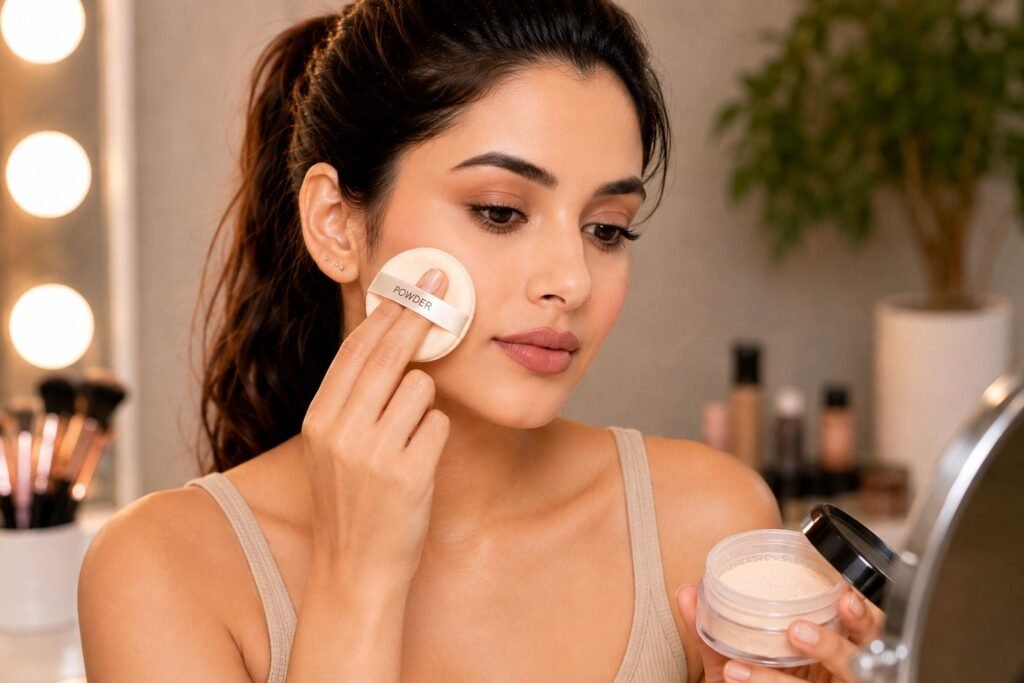
Once I’ve finished my makeup, I like to set it lightly so everything stays in place without making the skin look too dry or heavy. I like to look natural with makeup.
Setting Powder
If your skin gets oily, apply a small amount of setting powder to areas such as the forehead, nose, and chin. Setting powder gives a mate finish. If your skin is dry, you can skip powder or use very little.
Setting Spray
A setting spray is optional, but it can help bring the different layers of makeup together and give the skin a more natural finish. Hold it at a comfortable distance and lightly mist it over the face. Setting spray can lock your makeup and keep it stay all day long .
My Simple 10-Minute Makeup Routine
When I’m short on time, I keep my makeup routine very simple:
- Moisturizer and sunscreen
- Skin tint or light foundation
- Concealer where needed
- Blush for a fresh look
- Lightly fill the brows
- Apply mascara
- Add a tinted lip balm or lipstick
- Finish with setting spray, if needed
I don’t try to make every step perfect. The goal is simply to create an even, fresh, and polished look in a few minutes. That gives you more confidence and elegant appearance.
Common Makeup Mistakes Beginners Should Avoid
Using Too Much Foundation
Start with a small amount and build coverage only where necessary. Too much foundation can make makeup look heavy and cakey.
Choosing the Wrong Shade
Always try to choose a foundation that blends naturally with your face and neck. Always choose one tone lighter from your natural skin tone for fresh and bright look.
Skipping Skin Preparation
Dry or poorly prepared skin can make makeup look patchy. Moisturizer and sunscreen are important daytime steps So, never every skip skin care or skin preparation.
Overdoing Every Feature
If you want a natural beginner look, you don’t need dramatic eyes, heavy contour, bold brows, and intense lips all at once. These don’t give you a natural everyday look , try to use less product and keep the makeup simple .
Tips for a Natural-Looking Makeup Look
For me, the secret to natural makeup is using less product and blending more carefully. Choose lightweight formulas, apply thin layers, and build coverage gradually.
Keep your foundation close to your natural skin tone and choose blush and lip colors that complement your complexion. Don’t worry about covering every tiny imperfection—natural skin is supposed to look like skin.
I also find that good lighting makes a huge difference. Applying makeup near natural daylight helps you see whether your foundation, blush, and other products are blending properly.
Most importantly, don’t feel pressured to make your makeup look perfect. The more you practice, the easier it becomes to understand what products and techniques work best for you.
Tips for a Natural-Looking Makeup Look
When I want my makeup to look natural, I always remind myself that less is more. I start with a light layer of foundation or skin tint and only add extra coverage where I actually need it.
Here are a few simple tips that make a big difference:
- Use thin layers: Apply a small amount of each product and build it gradually.
- Blend properly: Take your time around the nose, jawline, and hairline so there are no visible edges.
- Choose natural shades: Soft pink, peach, nude, and neutral brown shades are easy to wear every day.
- Don’t over-powder: Too much powder can make the skin look dry or cakey.
- Keep brows soft: Fill only the sparse areas instead of creating very dark, sharp brows.
- Add a little blush: A soft flush can make the whole face look fresh and healthy.
- Keep lips comfortable: A tinted balm or soft lipstick can complete the look without appearing too heavy.
The goal isn’t to hide your natural features. It’s simply to enhance them and feel confident in your makeup.
Conclusion
Creating a beautiful makeup look doesn’t have to be complicated, especially when you’re just starting and know the right product and steps. I’ve found that a simple routine with a few essential products can be enough to create a fresh, natural, and polished appearance.
Start with well-prepared skin, then apply your base, concealer, blush, brows, mascara, and lip color. The most important thing is to start with small amounts and blend well rather than applying too much product. Don’t forget to hydrate your skin first .
Don’t worry if your makeup isn’t perfect at first. With a little practice, you’ll learn which products, shades, and techniques work best for you. Most importantly, enjoy the process and use makeup as a way to enhance your natural features and express your personal style.
FAQ: Simple Makeup Routine for Beginners
How to start a basic makeup routine?
Start with a clean, moisturized face and sunscreen. Then apply a light foundation or BB cream, concealer where needed, blush, and finish with mascara and lip color. Keep it simple until you get comfortable with the products.
What is a simple makeup routine for beginners?
A simple routine can be moisturizer + foundation/BB cream + concealer + blush + mascara + lip product. You don’t need a lot of products to create a fresh, everyday look.
How does Gen Z do makeup?
Gen Z makeup often focuses on a fresh, natural-looking finish rather than heavy coverage. Cream blush, soft brows, subtle concealer, glowing skin, and a tinted lip are popular choices. The key is making the makeup look effortless and personal.
What is a good 3-step makeup routine?
For a really quick look, try:
- Base: BB cream or lightweight foundation
- Color: Cream blush
- Finish: Mascara and tinted lip balm
It’s quick, easy, and perfect for everyday wear.
What’s the first step in makeup?
The first step is skin preparation. Cleanse your face, apply moisturizer, and use sunscreen during the day. This helps your makeup apply more smoothly and can prevent your skin from feeling dry or irritated.