
Introduction
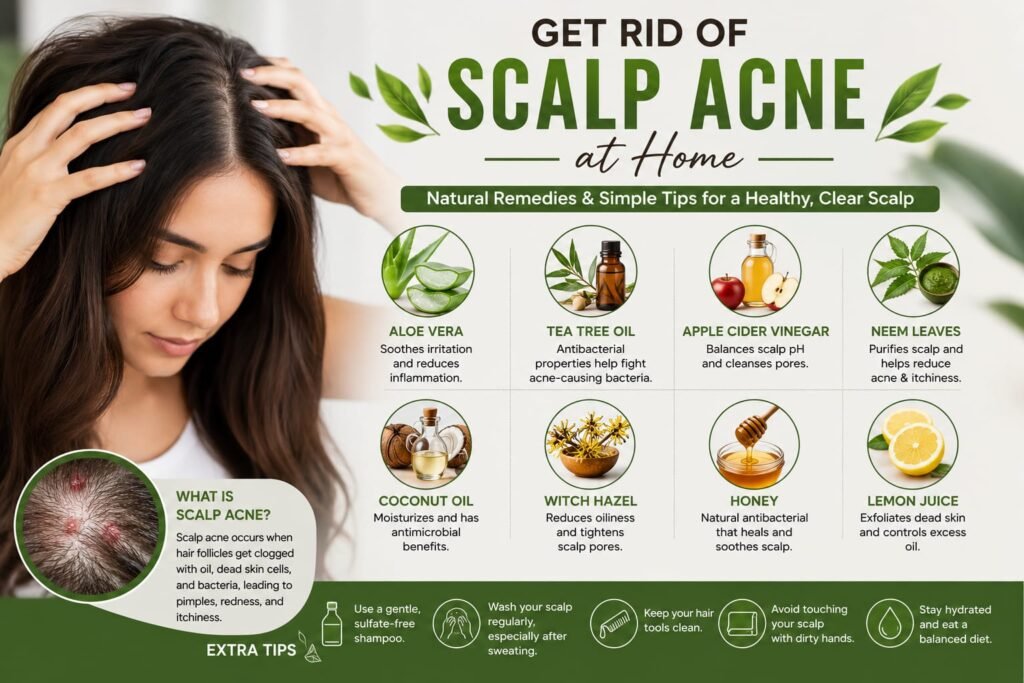
Scalp acne can be frustrating, especially when you have small bumps, pimples, itching, or tenderness around your hairline and scalp. Sometimes, these breakout may appear after sweating, using heavy hair products, or going several days without washing your hair.
Scalp acne can develop for several reasons. Excess oil, sweat, dead skin and product buildup can sometimes block or irritate the hair follicles. Using heavy hair oils, styling products or wearing tight hats for long periods may also contribute to the problem. For some people, hormonal changes and certain skin conditions can also play a role.
The good news is that simple scalp-care habits can often help reduce scalp breakouts. You do not always need a complicated routine or lots of expensive products. The key is keeping your scalp clean, avoiding irritating products, and giving your skin time to recover.
It is important to remember that every bump on the scalp is not necessarily acne. Conditions such as dandruff, folliculitis or other skin problems may sometimes look similar. That is why persistent, painful or severe breakouts should be checked by a dermatologist.
In this guide, I’ll share 10 simple tips for how to get rid of scalp acne at home and keep your scalp feeling clean and healthy with the right care and patience, you can work toward a cleaner, healthier and more comfortable scalp.
Table of Contents
What Is Scalp Acne?
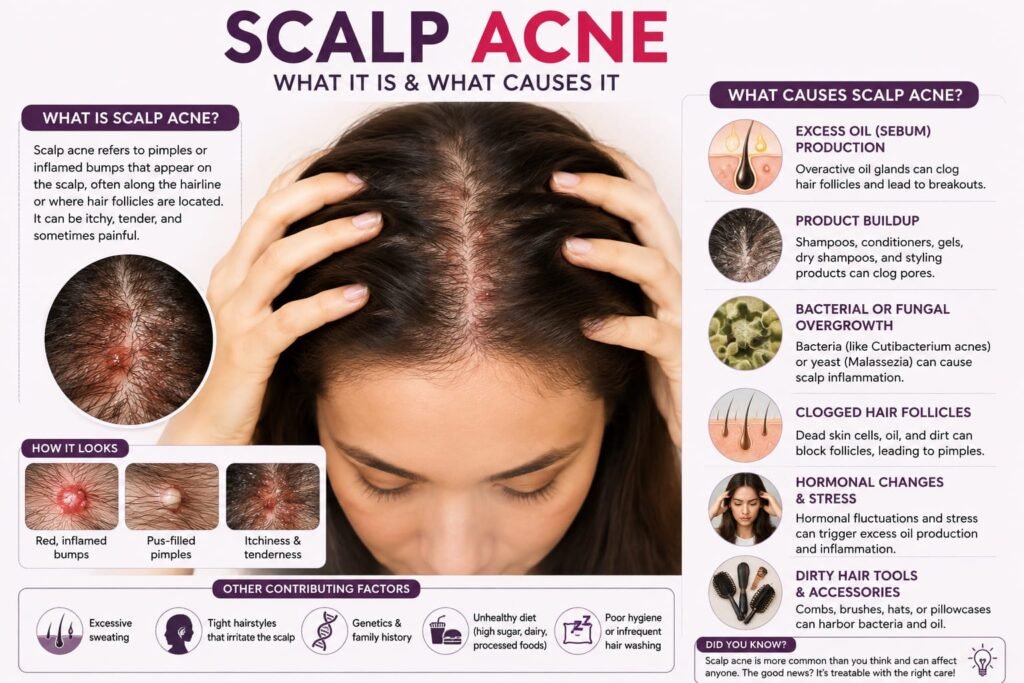
Scalp acne refers to pimples or acne-like bumps that develop on the scalp or around the hairline. They can look like small red bumps, whiteheads, or painful spots.
These bumps may happen when hair follicles become clogged with oil, dead skin cells, sweat, or product buildup. In some cases, the bumps may actually be related to folliculitis, which can look similar to acne.
This is why it is important not to assume that every scalp bump is ordinary acne.
What Causes Scalp Acne?
Several things can contribute to scalp breakouts, including:
- Excess oil on the scalp
- Sweat and heat
- Hair product buildup
- Heavy oils or greasy styling products
- Infrequent hair washing
- Wearing hats or helmets for long periods
- Friction around the scalp
- Scratching or irritating the scalp
- Certain hair products that do not suit your scalp
Understanding the possible cause can make it easier to manage the problem.
10 Simple Tips to Get Rid of Scalp Acne at Home
1. Wash Your Scalp Regularly
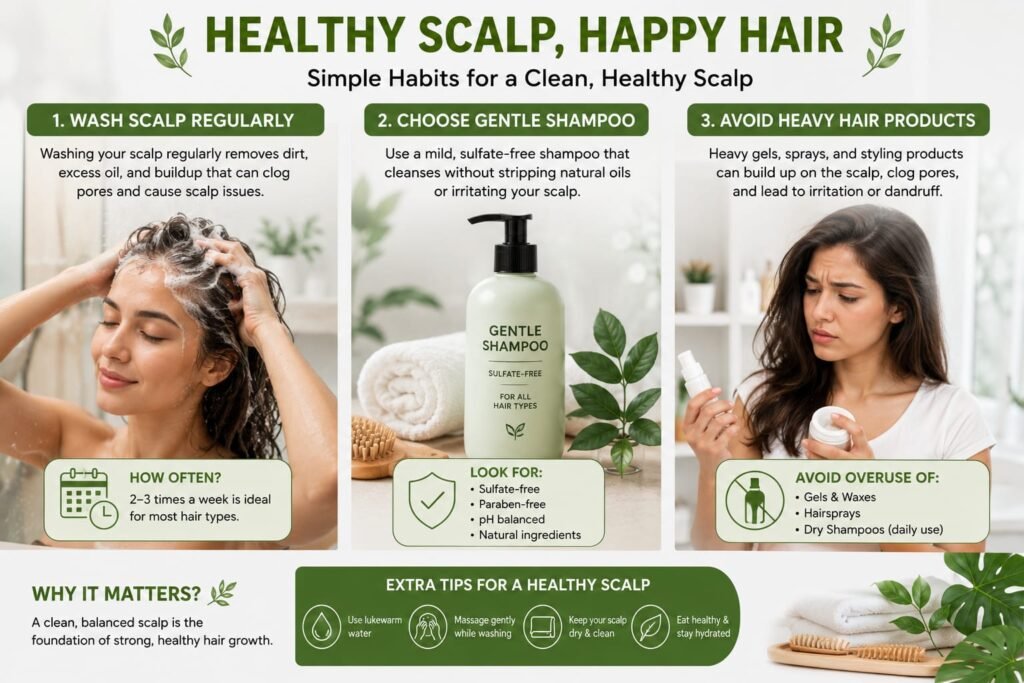
One of the simplest ways to care for a breakout-prone scalp is to keep it clean.Sweat, oil, dead skin, and styling products can collect around the hair follicles. Regular washing helps remove this buildup.How often you should wash depends on your scalp and hair type.
If your scalp becomes oily quickly or you exercise frequently, you may need to wash more often.However, avoid washing aggressively. A gentle cleanse is usually better than scrubbing your scalp hard.
2. Choose a Gentle Shampoo
Your shampoo matters when dealing with scalp bumps.
Choose a shampoo that cleans your scalp without leaving it feeling extremely dry or irritated. If you have an oily scalp, a suitable shampoo may help control excess oil and buildup.
Some people may benefit from shampoos containing ingredients such as salicylic acid, but these products should be used according to their instructions. If a shampoo causes burning, severe dryness, or irritation, stop using it.
3. Avoid Heavy Hair Products
Hair oils, thick creams, waxes, pomades, and some styling products can leave residue around your scalp. If you are experiencing scalp acne, take a look at the products you use regularly.
Try reducing heavy products and avoid applying greasy styling products directly to areas where you frequently get bumps. This does not mean you need to stop caring for your hair. Instead, choose lighter products that work well with your scalp.
4. Keep Your Hair Clean After Sweating
Sweating is normal, especially after exercise or during hot weather. But leaving sweat and oil sitting on your scalp for a long time may contribute to irritation and buildup.
After a workout, try to clean your scalp when practical.
If you cannot wash your hair immediately, at least allow your scalp to dry and avoid keeping a sweaty hat or tight head covering on for long periods. A clean scalp can make your overall hair-care routine much easier.
5. Don’t Scratch or Pop the Pimples
This is one of the most important tips.
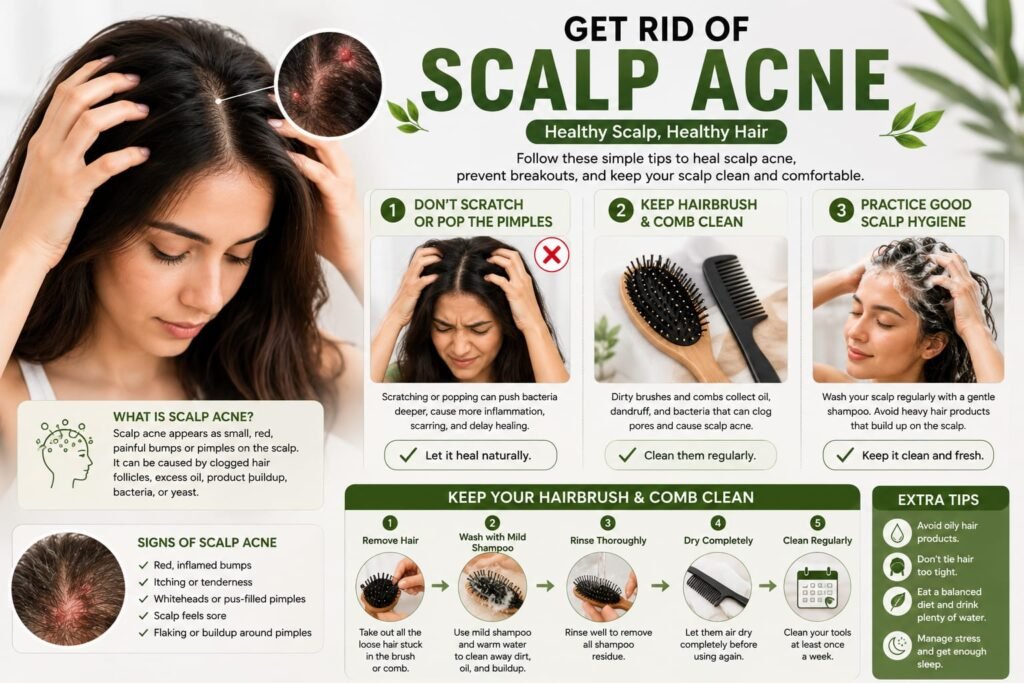
When you feel a bump on your scalp, it can be tempting to scratch, squeeze, or pop it. Try not to.
Picking at scalp pimples can irritate the skin and may increase the risk of infection or marks.
Instead, leave the area alone and use gentle hair-care products. If a bump becomes very painful, swollen, or keeps returning, professional advice is better than repeatedly squeezing it.
6. Keep Your Hairbrush and Comb Clean
Your hairbrush and comb come into contact with your hair and scalp regularly. They can collect oil, dead skin, hair products, and dirt.
Clean your brushes and combs regularly to reduce buildup.
Also, avoid sharing personal hair tools with other people.
It is a small habit, but keeping your hair-care tools clean can support better scalp hygiene.
7. Change Your Pillowcase Regularly
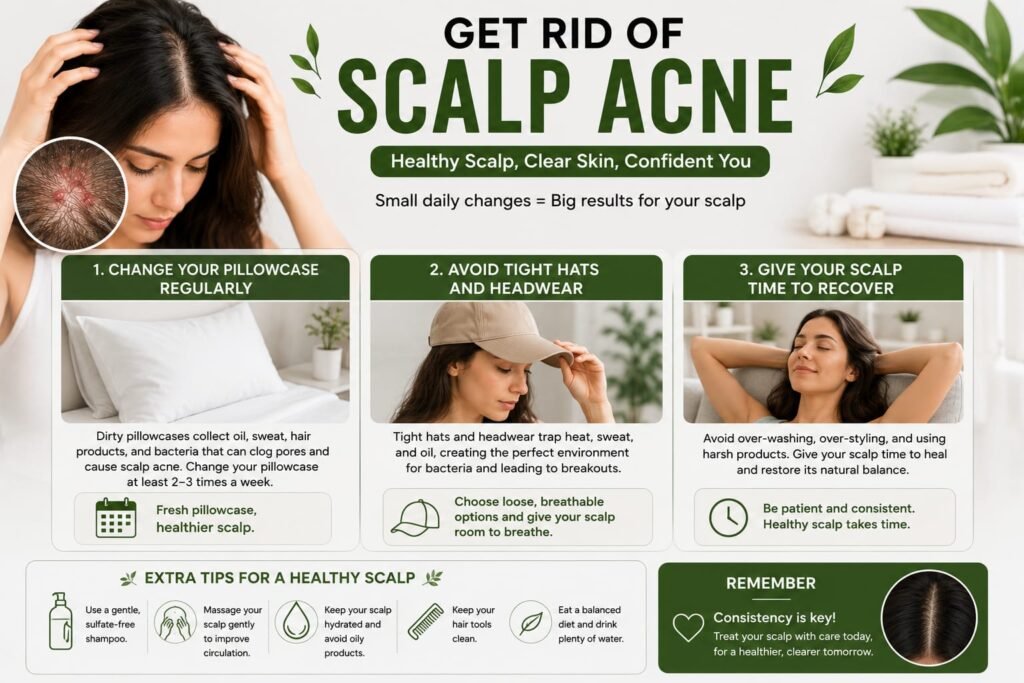
Your pillowcase touches your hair and scalp for several hours while you sleep.
Oil, sweat, hair products, and dead skin can collect on the fabric over time.
Changing your pillowcase regularly is a simple hygiene habit that may help keep your sleeping environment cleaner.
If you use leave-in products, oils, or styling creams before bed, be especially mindful of product transfer onto your pillow.
8. Avoid Tight Hats and Headwear
Wearing tight hats, helmets, or other headwear for long periods can create heat, sweat, and friction around your scalp.
You do not necessarily need to stop wearing them. Instead, make sure they fit comfortably and keep them clean. After heavy sweating, give your scalp some time to cool and dry when possible.
This can be particularly helpful if you notice that scalp bumps appear around areas where your headwear touches your skin.
9. Be Careful With Hair Oils
Hair oil can be useful for some hair types, but applying heavy oils directly to an acne-prone scalp may not be the best choice for everyone.
If you notice that scalp bumps become worse after using a particular oil, stop applying it to your scalp and see whether the situation improves.
You can still use a small amount on your hair lengths and ends if your hair needs extra moisture.
Remember that what works for your hair may not always work for your scalp.
10. Give Your Scalp Time to Recover
Sometimes the best thing you can do is simplify your routine.
If you are using many styling products, oils, treatments, and scalp scrubs, your scalp may become irritated.
For a while, try a simple routine:
Gentle shampoo → clean scalp → light conditioner on hair lengths → minimal styling products.
Avoid constantly changing products. Give your scalp some time to settle and observe what makes the bumps better or worse.
Can You Treat Scalp Acne Naturally?
Many home remedies for scalp acne are shared online, including lemon juice, baking soda, apple cider vinegar, and essential oils.
I would be careful with these DIY treatments.
Natural does not automatically mean gentle. Ingredients such as lemon juice or undiluted essential oils can irritate the scalp and make the problem worse.
Instead of experimenting with harsh kitchen remedies, focus on gentle cleansing, reducing buildup, avoiding irritating products, and keeping your scalp comfortable.
Scalp Acne vs. Dandruff: Are They the Same?
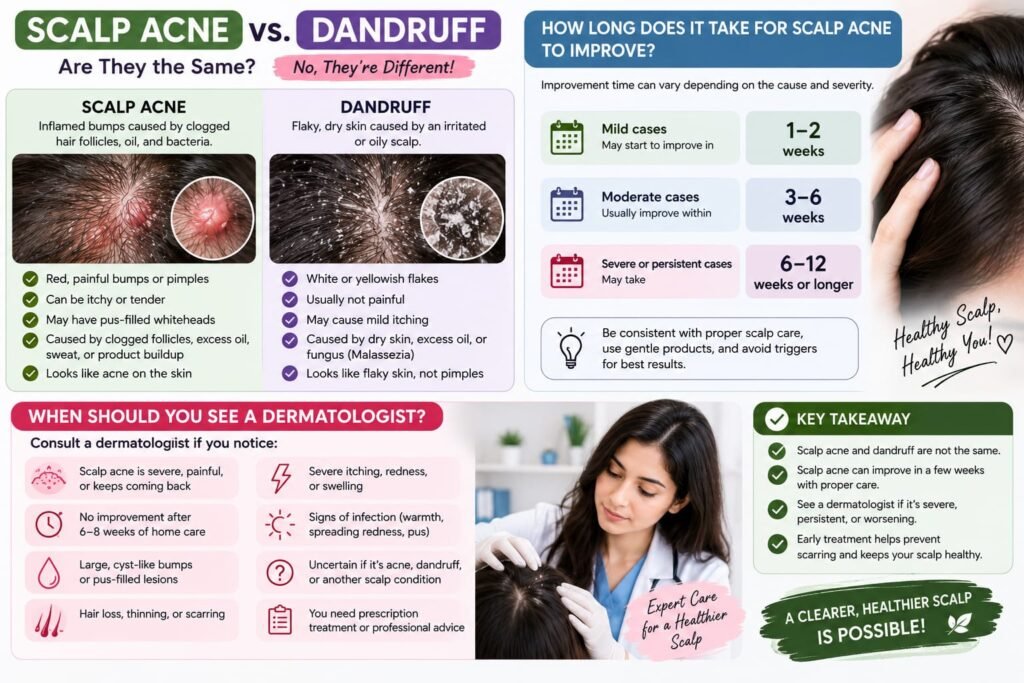
No. Scalp acne and dandruff are different problems, although they can sometimes occur together.
Dandruff usually causes flakes and itching, while scalp acne tends to cause bumps or pimples around hair follicles.
If you have both flakes and bumps, you may need to adjust your scalp-care routine carefully rather than treating everything as acne.
If you are unsure what is causing your scalp problem, a dermatologist can help identify it.
How Long Does It Take for Scalp Acne to Improve?
There is no exact timeline because it depends on the cause and severity of the problem.
If product buildup or poor scalp hygiene is contributing to the bumps, simplifying your routine and washing regularly may help over time.
The important thing is to avoid picking at the bumps and give your scalp consistent care.
If the problem continues despite your efforts, it may not be ordinary acne and may require a different treatment.
When Should You See a Dermatologist?
Home care may be enough for mild scalp bumps, but you should seek professional advice if:
- The bumps are very painful.
- They are spreading or becoming worse.
- You have pus-filled or severely inflamed bumps.
- Your scalp is very itchy, swollen, or painful.
- You develop sores or crusting.
- You notice hair loss around the affected area.
- The problem keeps coming back.
- Simple scalp care does not improve the problem.
A dermatologist can determine whether you have scalp acne, folliculitis, dandruff, or another scalp condition and recommend appropriate treatment.
Simple Scalp Routine for Acne-Prone Skin
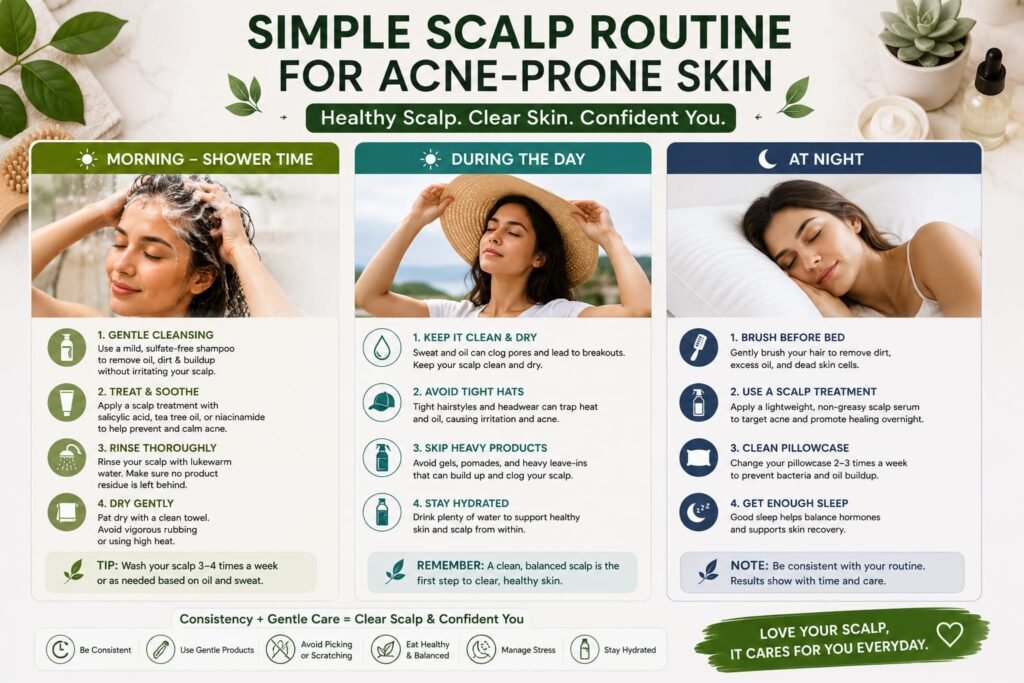
If you want to keep your routine simple, try these basic steps:
Morning or shower time:
- Wash your scalp with a suitable shampoo.
- Rinse thoroughly.
- Use conditioner mainly on your hair lengths.
- Avoid applying heavy products directly to your scalp.
During the day:
- Avoid touching or scratching your scalp unnecessarily.
- Keep hats and headwear clean.
- Try to wash or rinse your scalp after heavy sweating.
At night:
- Remove excess styling products when appropriate.
- Keep your pillowcase clean.
- Avoid sleeping with heavy products directly on your scalp.
Simple and consistent care is often better than using too many products.
Conclusion
Learning how to get rid of scalp acne at home does not have to be complicated. Start by keeping your scalp clean, choosing gentle products, washing after heavy sweating, and avoiding heavy buildup.
Most importantly, do not scratch or pop scalp bumps. Give your scalp time to recover and pay attention to products that may be making the problem worse.
At Beauty Lux Hub, we believe that healthy-looking hair starts with taking care of the scalp too. If your scalp acne is painful, severe, keeps returning, or does not improve with simple care, it is best to consult a dermatologist for proper advice.
Frequently Asked Questions
Can I get rid of scalp acne at home?
Mild scalp breakouts may improve with better scalp hygiene, regular washing, reducing product buildup, and avoiding irritating products. However, persistent or severe bumps may need professional treatment.
Is scalp acne caused by dirty hair?
Not necessarily. Scalp acne can have several causes, including oil, sweat, product buildup, friction, and irritation. Regular washing can help manage buildup, but scalp acne is not simply a result of being “dirty.”
Can hair oil cause scalp acne?
Heavy or greasy products may contribute to clogged follicles or buildup in some people. If you notice more bumps after applying a particular oil, consider stopping it on your scalp and using it only on your hair lengths.
Should I pop scalp pimples?
No. Try not to squeeze or pop them. Picking can irritate the scalp and increase the chance of infection or marks.
Can dandruff cause scalp pimples?
Dandruff and scalp acne are different conditions, but scalp irritation and scratching can make the scalp more uncomfortable. If you have both flakes and persistent bumps, consider getting the problem checked.