
Introduction

If you have acne-prone skin, applying makeup can sometimes feel a little stressful. I know how frustrating it can be when you spend time creating a nice makeup look, only to notice that your foundation is sitting on bumps, highlighting dry patches, or making your skin look heavy.
Over time, I learned that makeup for acne-prone skin is not about covering every little mark with a thick layer of foundation. It is more about preparing the skin, choosing the right products, and applying makeup gently.
You can still enjoy foundation, concealer, blush, and other makeup products while keeping your routine simple. The key is to avoid unnecessary layers and pay attention to how your skin reacts to different products.
In this guide, I’m sharing the makeup for acne-prone skin tips that can help create a smoother and more comfortable makeup look.
Table of Contents
1. Start With Clean Skin

Before applying makeup, I always like to start with a clean face. This is especially important if your skin is prone to breakouts.
Use a gentle cleanser to remove oil, sweat, dirt, and leftover skincare. Avoid aggressively scrubbing your face because this can leave your skin feeling irritated and uncomfortable.
After cleansing, gently pat your face dry with a clean towel instead of rubbing it.
Your skin does not need to feel extremely dry or tight after cleansing. A comfortable, clean base is enough.
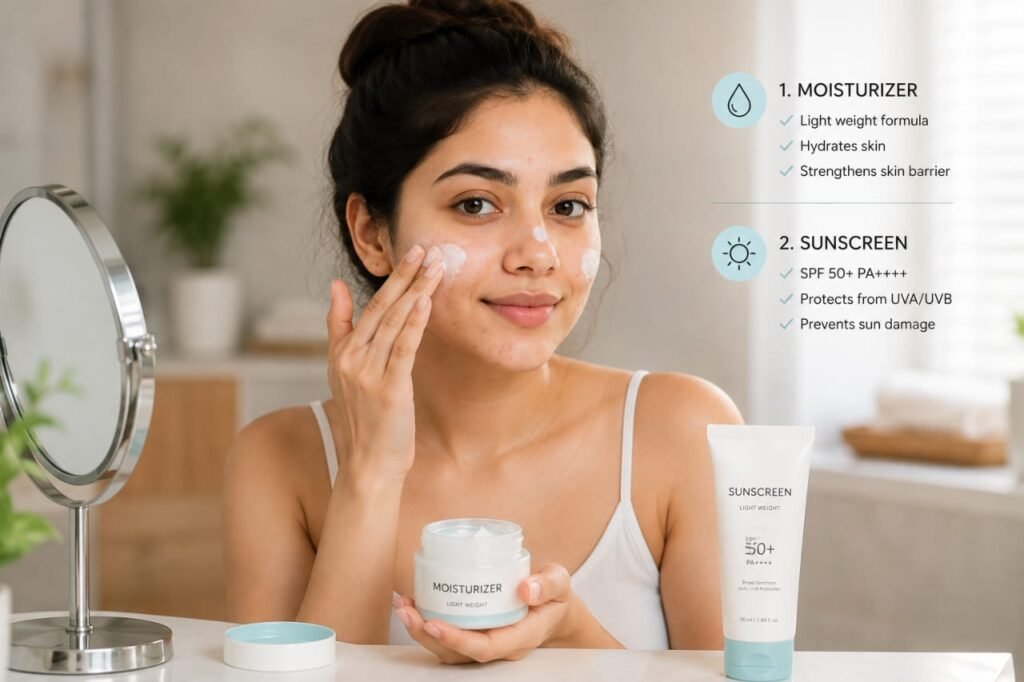
2. Never Skip Moisturizer
One mistake people with acne-prone skin sometimes make is skipping moisturizer because they are worried about adding more oil.
I used to think the same way, but a lightweight moisturizer can actually make makeup look much better.
Choose a lightweight, non-comedogenic moisturizer that feels comfortable on your skin. If your skin is oily, a gel or lightweight lotion may work well. If your skin is dry or flaky from acne treatments, you may prefer something a little more hydrating.
Give your moisturizer a few minutes to settle before starting your makeup.
3. Use Sunscreen During the Day
If you are doing your makeup during the daytime, sunscreen should be part of your routine.
Choose a sunscreen that feels comfortable under makeup and is labeled non-comedogenic if you are concerned about clogged pores.
Apply it after your moisturizer and allow it to settle before applying primer or foundation.
This step is easy to forget, but it is an important part of a daytime skincare and makeup routine.
4. Choose Non-Comedogenic Makeup
When shopping for makeup, I recommend paying attention to the product label.
Look for products described as non-comedogenic, especially when choosing foundation, concealer, and moisturizer.
Non-comedogenic generally means the product is formulated to be less likely to clog pores. However, everyone’s skin is different, so a product that works well for one person may not work the same way for another.
If a particular product consistently seems to irritate your skin or cause problems, it may be better to stop using it.
5. Keep Your Makeup Routine Simple
You do not need ten different products to create a beautiful makeup look.
When my skin is having a difficult day, I prefer keeping my routine simple:
- Moisturizer
- Sunscreen
- Primer
- Foundation or skin tint
- Concealer
- Powder if needed
- Blush
- Mascara
- Lip product
A simple routine can look more natural and may also feel more comfortable on acne-prone skin.
The goal is even-looking skin, not completely hiding every mark.
6. Choose the Right Primer
Primer can help create a smoother surface before foundation.
For acne-prone skin, look for a primer that feels lightweight and does not leave your skin feeling greasy or heavy.
If you have oily areas, a light mattifying primer may help control shine. If your skin is dry or flaky, a hydrating primer may be more comfortable.
You do not necessarily need to apply primer everywhere. I often prefer applying it only where I feel it is needed.
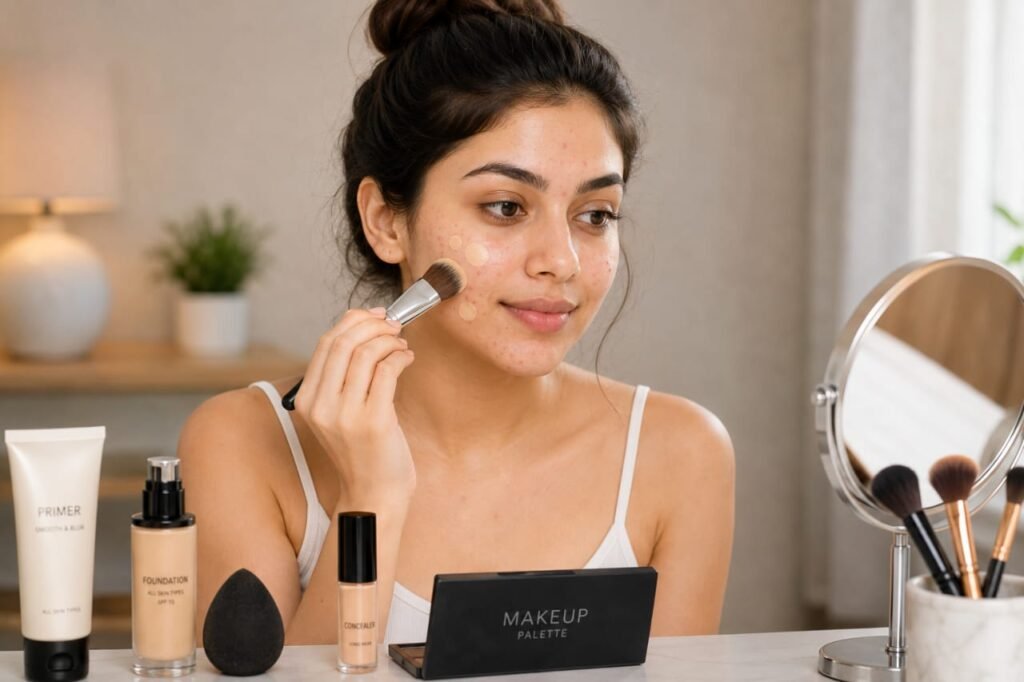
7. Don’t Apply Too Much Foundation
This is one of my favorite tips.
When you have acne or acne marks, it can be tempting to apply a thick layer of foundation over the entire face. But too much foundation can actually make bumps and texture more noticeable.
Instead, apply a thin, even layer first.
Use a damp makeup sponge, clean brush, or your preferred application tool to blend it gently.
If you still need more coverage, build it slowly instead of applying a heavy layer all at once.
8. Use Concealer Only Where You Need It
You don’t always need full-coverage foundation to hide acne marks.
A good concealer can provide extra coverage exactly where you need it.
Apply a small amount directly over redness, dark spots, or individual blemishes. Then gently blend around the edges while keeping enough product over the area.
I find that spot concealing can give a more natural finish than covering the entire face with heavy makeup.
Remember, the goal isn’t to erase your skin texture. It is simply to create a more even appearance.
9. Be Gentle Around Active Breakouts
When you have an active breakout, avoid rubbing or repeatedly going over the same area with a brush or sponge.
This can make makeup application frustrating and may irritate already-sensitive skin.
Instead, use light tapping motions when applying concealer or foundation around blemishes.
If a blemish is raised, don’t keep adding product in an attempt to make it completely flat. Makeup can cover some of the color, but it cannot completely remove the texture.
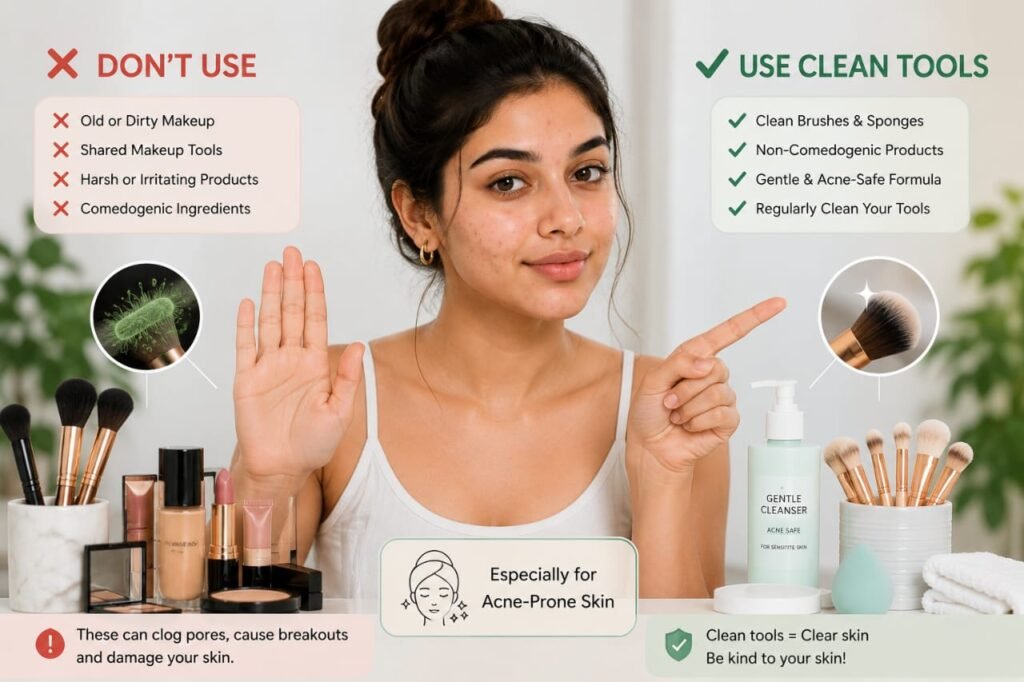
10. Use Clean Makeup Tools
Clean makeup brushes and sponges are extremely important for anyone, but especially if you have acne-prone skin.
Makeup tools can collect oil, makeup residue, dirt, and other buildup when they are not cleaned regularly.
Wash your brushes according to their use and the product instructions. Makeup sponges should also be cleaned regularly and replaced when they become difficult to clean or start showing signs of wear.
And don’t forget to let your tools dry properly after washing.
11. Avoid Sharing Makeup
Sharing makeup may seem harmless, especially when you’re getting ready with friends, but it is better to keep your personal makeup products personal.
Avoid sharing products that come into direct contact with the face, such as:
- Foundation
- Concealer
- Powder
- Makeup sponges
- Brushes
- Mascara
- Lip products
Keeping your makeup products and tools separate is a simple hygiene habit.
12. Be Careful With Heavy Layers of Powder
Powder can be useful if your skin becomes oily, but too much powder can make acne texture look more obvious.
Instead of covering your entire face with a thick layer, apply a small amount where you actually need it.
The T-zone, forehead, nose, and chin may need more powder than other areas.
If your skin is dry around a blemish, avoid putting too much powder directly over that area because it can emphasize flakes.
13. Choose a Finish That Looks Natural
When you have acne-prone skin, you may think completely matte makeup is the best option.
But an extremely matte finish can sometimes make texture and dry patches more noticeable.
A natural or soft-matte finish can be a nice middle ground.
It gives the skin a more balanced appearance without making it look overly shiny or completely flat.
The best finish depends on your skin type, the weather, and your personal preference.
14. Don’t Forget Blush and Bronzer
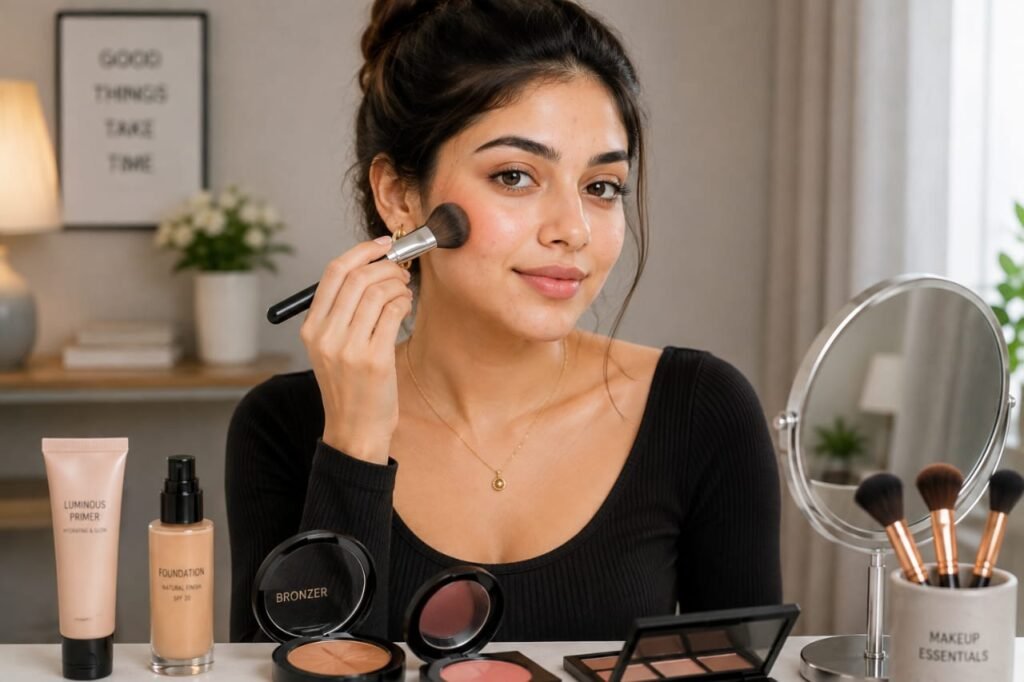
Having acne does not mean you need to avoid colorful makeup.
Blush and bronzer can actually bring warmth and life back to the face after applying foundation.
If you have redness or active acne on your cheeks, apply blush carefully and blend it gently.
Cream products can look beautiful, but if your skin is oily or you prefer longer wear, powder products may be easier to control.
Choose shades that complement your skin tone rather than trying to use makeup to completely hide your natural complexion.
15. Avoid Constantly Touching Your Face
This sounds like a small thing, but it can make a difference to your makeup.
Throughout the day, try not to repeatedly touch, scratch, squeeze, or pick at your face.
Not only can touching disturb your makeup, but your hands can also transfer oil and dirt to your skin.
If you feel oily during the day, use blotting paper rather than repeatedly wiping your face.
16. Don’t Try to Cover Every Blemish
This is something I had to learn myself.
When I first started dealing with breakouts, I wanted my skin to look completely perfect. I would keep adding concealer until every mark disappeared.
The problem was that the extra makeup often made my skin look heavier and more textured.
Now, I focus on making my complexion look fresh and even rather than completely flawless.
A little redness or a small mark showing through does not ruin your makeup.
Real skin has texture.
17. Remove Your Makeup Before Bed
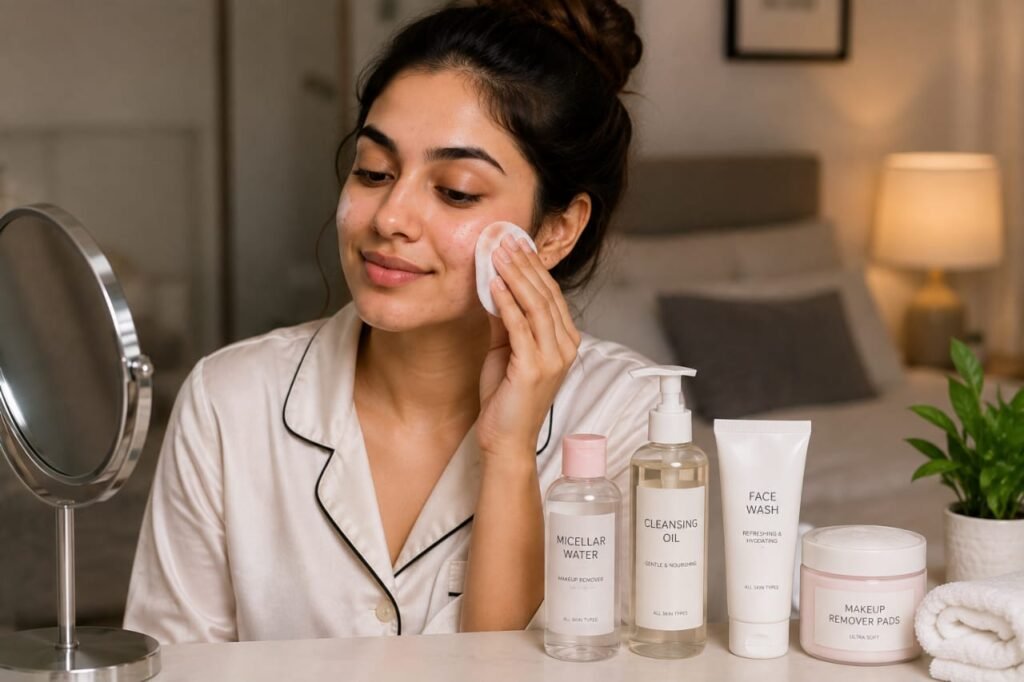
This is probably one of the most important habits.
No matter how tired you are, try not to sleep with a full face of makeup.
At the end of the day, gently remove your makeup and cleanse your face. Follow with your usual skincare routine.
You don’t need to scrub aggressively to remove makeup. A gentle approach is usually more comfortable for acne-prone skin.
If you wear long-lasting or waterproof makeup, use an appropriate makeup remover before cleansing.
18. Give Your Skin Makeup-Free Days When You Want
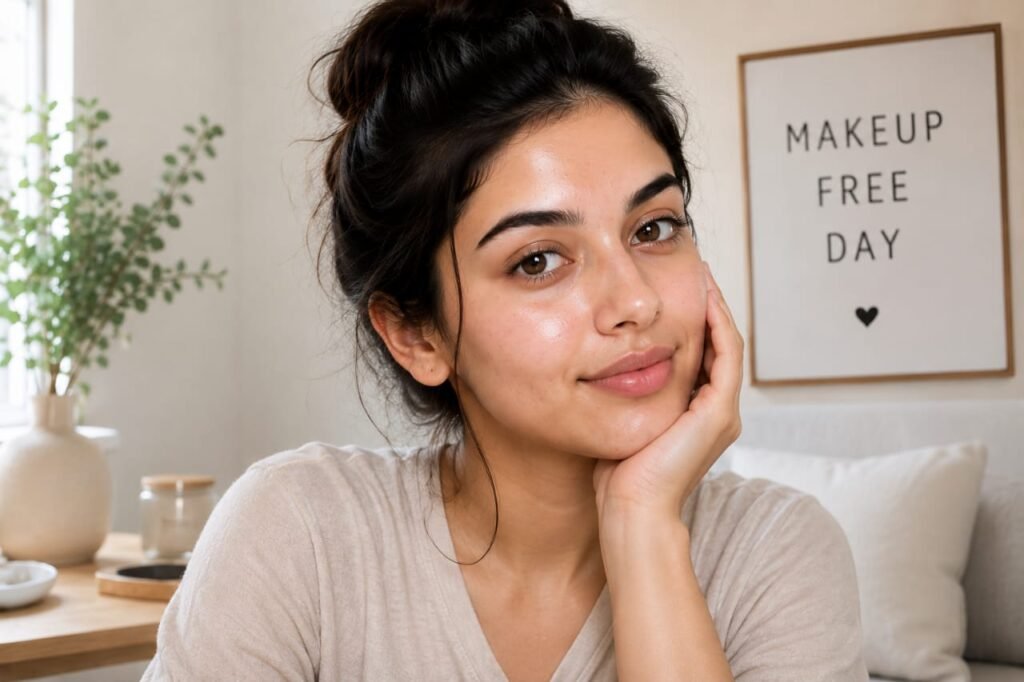
You don’t have to wear makeup every day.
If your skin feels irritated, dry, or uncomfortable, giving yourself a makeup-free day can make your routine feel easier.
On those days, focus on your normal skincare routine and keep things simple.
Of course, you don’t have to avoid makeup just because you have acne. Acne-prone skin can absolutely wear makeup. It’s about finding products and habits that your skin tolerates well.
19. Patch-Test New Products
Whenever I try a new makeup or skincare product, I prefer not to immediately put it all over my face.
If possible, test a small amount first and pay attention to how your skin responds.
This is especially useful when trying a new primer, foundation, concealer, or skincare product.
If you notice persistent irritation or a reaction, discontinue the product and consider getting professional advice if needed.
20. Focus on Skin Comfort, Not Perfection
The biggest lesson I’ve learned is that makeup should make you feel confident, not make you feel like you have to hide your skin.
Acne can be frustrating, but you don’t need perfect skin to enjoy makeup.
Use makeup to enhance the features you like, experiment with colors, and create looks that make you feel good.
Your skin can still have texture underneath your makeup—and that’s completely normal.
A Simple Makeup Routine for Acne-Prone Skin
If you want to keep everything easy, here’s a routine you can follow:
Step 1: Gently cleanse your face.
Step 2: Apply a lightweight moisturizer.
Step 3: Apply sunscreen during the day.
Step 4: Use a suitable primer if you want one.
Step 5: Apply a thin layer of foundation or skin tint.
Step 6: Spot-conceal areas that need additional coverage.
Step 7: Lightly set oily areas with powder.
Step 8: Add blush, bronzer, mascara, and your favorite lip color.
Step 9: Use setting spray if it works well with your makeup.
Step 10: Remove your makeup gently at the end of the day.
This routine is simple enough for everyday makeup and can be adjusted depending on how your skin looks and feels.
Common Makeup Mistakes to Avoid With Acne-Prone Skin

Sometimes the products aren’t the problem—the way we use them is.
Here are a few common mistakes worth avoiding:
- Applying too many layers of foundation
- Using dirty brushes or sponges
- Sleeping with makeup on
- Picking at blemishes while applying makeup
- Sharing makeup products
- Using products that repeatedly irritate your skin
- Scrubbing the face aggressively before makeup
- Applying too much powder over textured areas
- Touching the face throughout the day
- Changing several products at the same time
Keeping your routine simple makes it easier to understand what works for your skin.
Conclusion
Having acne-prone skin doesn’t mean you have to avoid makeup. With the right products and a gentle routine, you can create a smooth, natural, and comfortable makeup look without using too many layers.
For me, the most helpful approach is keeping things simple: start with clean and moisturized skin, choose lightweight and non-comedogenic products, apply foundation in thin layers, and use concealer only where extra coverage is needed. Keeping your brushes clean and removing makeup properly at night are just as important.
And remember, you don’t need to hide every blemish to look beautiful. Real skin has texture, marks, and imperfections. Makeup should help you feel confident and have fun with your look—not make you feel pressured to have perfect skin.
Frequently Asked Questions
1. Is makeup safe for acne-prone skin?
Yes, you can wear makeup if you have acne-prone skin. Choose products that are suitable for your skin and preferably non-comedogenic. Also, remove your makeup properly at the end of the day.
2. Should I use primer on acne-prone skin?
Yes. A lightweight primer can help create a smoother base for makeup. If your skin is oily, you may prefer an oil-control primer. Avoid using too much product.
3. What type of foundation is best for acne-prone skin?
Look for a lightweight, non-comedogenic foundation that provides the coverage you need. Instead of applying one thick layer, build coverage gradually where necessary.
4. How can I cover acne without making it look cakey?
Apply a thin layer of foundation first, then use a small amount of concealer directly on the areas that need more coverage. Gentle tapping motions usually work better than rubbing.
5. Can I wear makeup over active acne?
Yes, but be gentle. Avoid rubbing or picking the affected area while applying makeup. If a product causes irritation or discomfort, stop using it.
6. How often should I clean my makeup brushes?
Clean your makeup brushes regularly, especially those used for foundation and concealer. Keeping your tools clean helps prevent the buildup of oil, makeup residue, and dirt.
7. Should I use powder on acne-prone skin?
You can use powder if you need to control shine or set your makeup. Apply a small amount to oily areas rather than layering powder over your entire face.