
Introduction
Dandruff is one of those hair problems that can be annoying, embarrassing, and difficult to manage. Those small white flakes on your shoulders or in your hair can appear even when you wash your hair regularly. Sometimes, your scalp may also feel itchy, dry, oily, or irritated. Although dandruff is usually not harmful or contagious, it can be uncomfortable and embarrassing.
The good news is that dandruff can often be managed with the right scalp care and hair-washing routine. You do not always need a complicated routine or expensive products. Understanding what may be causing the flakes and choosing the right products for your scalp can make a significant difference.
One important thing to remember is that having dandruff does not necessarily mean that your hair is dirty or that you have poor hygiene. In fact, many people continue to experience dandruff even when they wash their hair regularly. The key is finding a hair-washing and scalp-care routine that suits your particular hair and scalp type.
In this guide, I’ll explain how do you get rid of dandruff in your hair with 15 simple and practical tips. We will discuss proper hair washing, choosing an effective anti-dandruff shampoo, avoiding common scalp–care mistakes, and making small lifestyle changes that may help keep dandruff under control.
These tips are designed to be easy to understand and follow as part of your regular hair-care routine. However, persistent or severe dandruff, significant redness, swelling, pain or intense itching may indicate another scalp condition and should be evaluated by a dermatologist. Rest of the tips can help you keep your scalp clean, balanced, and healthier-looking .
Table of Contents
What Is Dandruff?
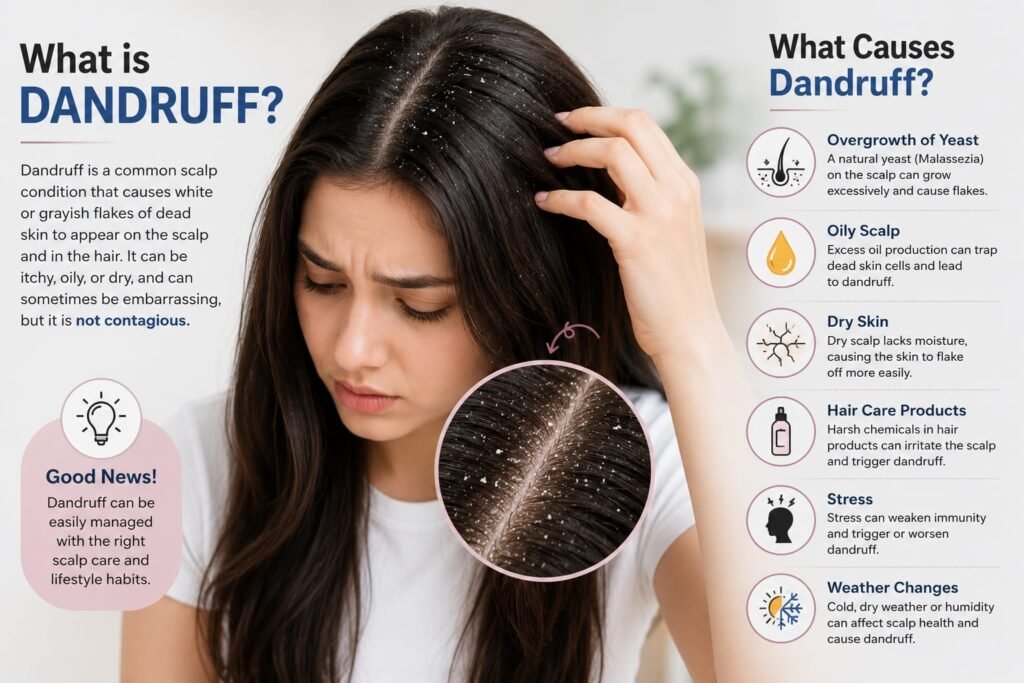
Dandruff is a common scalp condition that causes white or grayish flakes to appear in your hair and on your shoulders. It can also cause itching.
Dandruff is not simply caused by having a dirty scalp. It can be related to excess oil, irritation, dry skin, or a yeast called Malassezia that naturally lives on the scalp.
Some people experience mild dandruff, while others may have frequent flakes and an uncomfortable, itchy scalp.
What Causes Dandruff?
Before learning how to get rid of dandruff in your hair, it helps to understand what may be causing it.
Common factors include:
- An oily scalp
- Dry or irritated skin
- Infrequent hair washing
- Sensitivity to hair products
- Stress
- Cold or dry weather
- Certain scalp conditions
- Overgrowth or increased activity of Malassezia
Finding the possible cause can help you choose a better hair-care routine.
15 Simple Tips to Get Rid of Dandruff
1. Use an Anti-Dandruff Shampoo
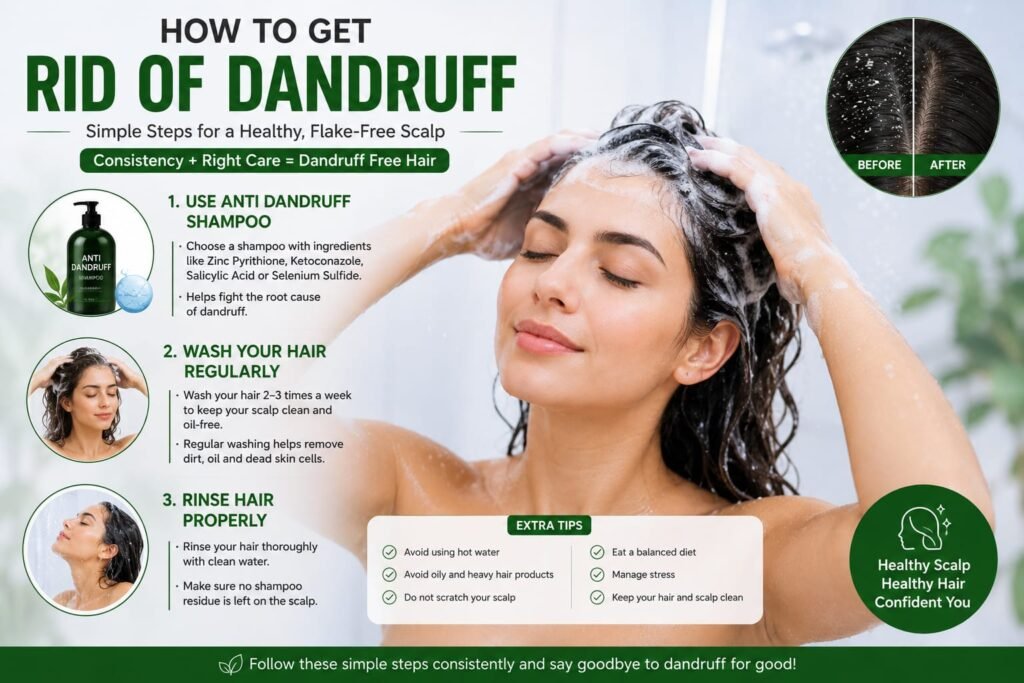
One of the easiest ways to manage dandruff is to use a dandruff shampoo.
Look for shampoos containing ingredients commonly used for dandruff control, such as ketoconazole, zinc pyrithione, selenium sulfide, salicylic acid, or coal tar.
Follow the instructions on the product because some treatments need to remain on the scalp for a few minutes before rinsing.
2. Wash Your Hair Regularly
Washing your hair regularly can help remove excess oil, dead skin cells, sweat, and product buildup from your scalp.
However, washing too often with a harsh shampoo can leave your scalp irritated and uncomfortable.
Try to find a routine that works for your scalp type. If your scalp becomes oily quickly, you may need to wash more frequently.
3. Focus Shampoo on Your Scalp
When washing your hair, pay attention to your scalp rather than only the hair lengths.
Apply shampoo to the scalp and gently massage it with your fingertips. Avoid scratching with your nails because this can irritate the skin.
Your hair lengths usually do not need aggressive scrubbing.
4. Rinse Your Hair Properly
Leaving shampoo or styling products on your scalp can sometimes cause irritation.
After shampooing, rinse your hair thoroughly with clean water. Make sure there is no leftover product around your scalp, hairline, or behind your ears.
A proper rinse is a small step, but it can make your routine more comfortable.
5. Avoid Scratching Your Scalp
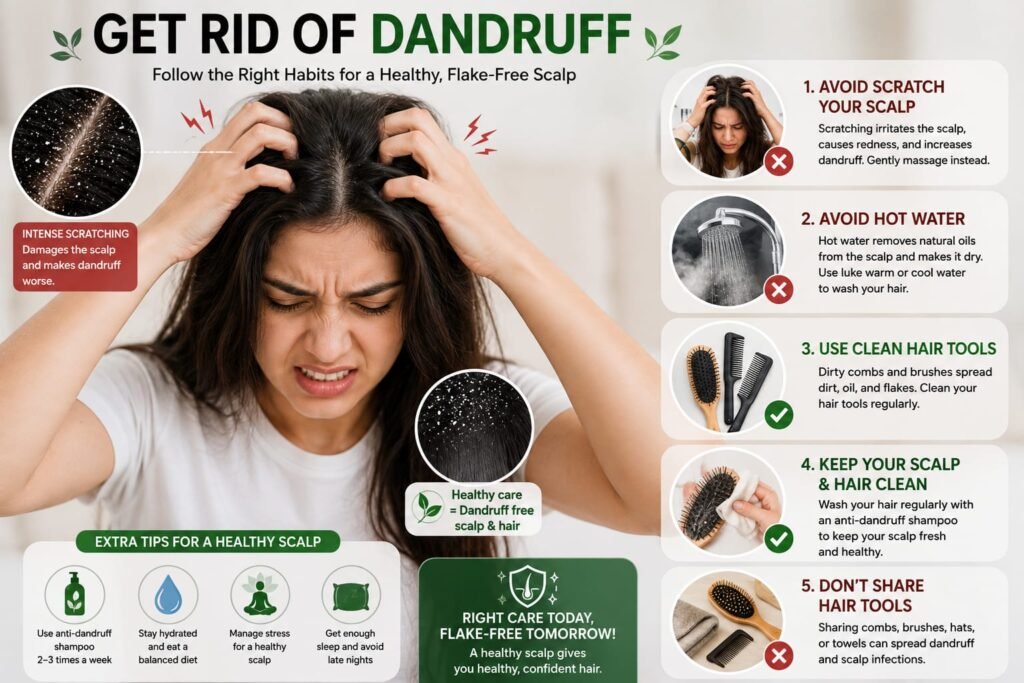
An itchy scalp can make you want to scratch, but try to avoid it.
Scratching can irritate the scalp and may create small scratches. Instead, gently massage your scalp with your fingertips when washing your hair.
If your scalp is extremely itchy or painful, it is better to speak with a dermatologist rather than continuously scratching it.
6. Choose Gentle Hair Products
Some hair products can irritate sensitive scalps. This may include certain gels, sprays, dyes, fragrances, or styling products.
If you notice that your dandruff or scalp irritation becomes worse after using a particular product, stop using it for a while and see whether your scalp improves.
Choosing gentle, scalp-friendly products can make your routine easier.
7. Don’t Use Too Much Dry Shampoo
Dry shampoo can be useful when you are short on time, but it should not replace regular hair washing.
Using too much dry shampoo may leave product buildup on your scalp. If you already have dandruff, excessive buildup may make your scalp feel uncomfortable.
Use dry shampoo occasionally and wash your scalp properly afterward.
8. Keep Your Scalp Moisturized
Not every flaky scalp is caused by simple dryness, but keeping your skin comfortable is still important.
If your scalp feels tight and dry, avoid very hot water and harsh shampoos. A gentle routine may help reduce irritation.
However, avoid applying heavy oils to your scalp simply because you have flakes. For some people with oily dandruff, extra oil may make the problem worse.
9. Avoid Very Hot Water
A hot shower can feel relaxing, especially in winter, but very hot water may dry and irritate your scalp.
Try washing your hair with lukewarm water instead.
This simple change can make your scalp feel more comfortable without requiring any expensive product.
10. Clean Your Hair Tools
Your hairbrush, comb, and other styling tools can collect oil, dead skin cells, and product residue.
Clean your brushes and combs regularly. Also avoid sharing personal hair tools with other people.
Keeping your hair-care tools clean is a simple part of maintaining good scalp hygiene.
11. Avoid Heavy Product Buildup
Hair sprays, gels, creams, oils, and styling products can build up on your scalp when they are not washed out properly.
If you regularly use styling products, make sure you are cleansing your scalp effectively.
You do not need to stop using every hair product. The goal is simply to avoid excessive buildup and choose products that your scalp tolerates well.
12. Manage Stress
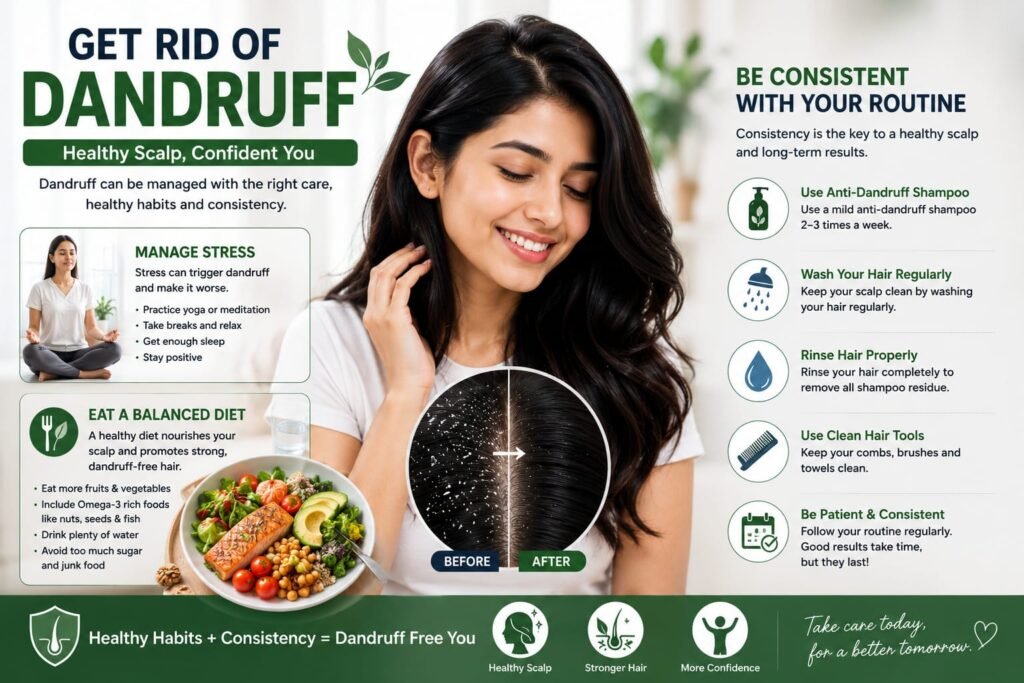
Stress does not directly mean that you will develop dandruff, but it can affect your overall skin and scalp health. Some people notice that their scalp problems become worse during stressful periods.
Try simple ways to manage everyday stress, such as:
- Getting enough sleep
- Taking short walks
- Exercising
- Spending time outdoors
- Taking breaks from screens
- Practicing relaxation techniques
A healthy lifestyle can support your overall well-being, including your skin and scalp.
13. Eat a Balanced Diet
Your scalp and hair can benefit from a balanced diet that provides essential nutrients.
Try to include foods such as:
- Eggs
- Fish
- Nuts and seeds
- Leafy green vegetables
- Fruits
- Whole grains
- Beans and lentils
- Yogurt and other nutritious foods
There is no single food that can magically remove dandruff. However, eating a balanced diet supports your overall health.
14. Don’t Share Towels or Hairbrushes
It is a good hygiene habit to avoid sharing personal items such as towels, combs, brushes, and hair accessories.
Keep your own hair tools clean and wash towels regularly.
This is especially useful if you have an irritated scalp or another scalp condition.
15. Be Consistent With Your Routine
One of the biggest mistakes people make is changing products every few days.
If you are using an anti-dandruff shampoo, give it enough time to work according to its directions. Be consistent with your washing routine and pay attention to how your scalp responds.
If one product does not help, another type of dandruff treatment may be more suitable.
How Often Should You Wash Dandruff Hair?
There is no single washing schedule that works for everyone.
If your scalp is oily, washing more frequently may help remove excess oil and buildup. If your scalp is dry or sensitive, washing too often with harsh products may increase irritation.
The important thing is to keep your scalp clean without over-drying it.
If you use a medicated dandruff shampoo, follow the instructions on the bottle or advice from your healthcare professional.
Can Dandruff Go Away Permanently?
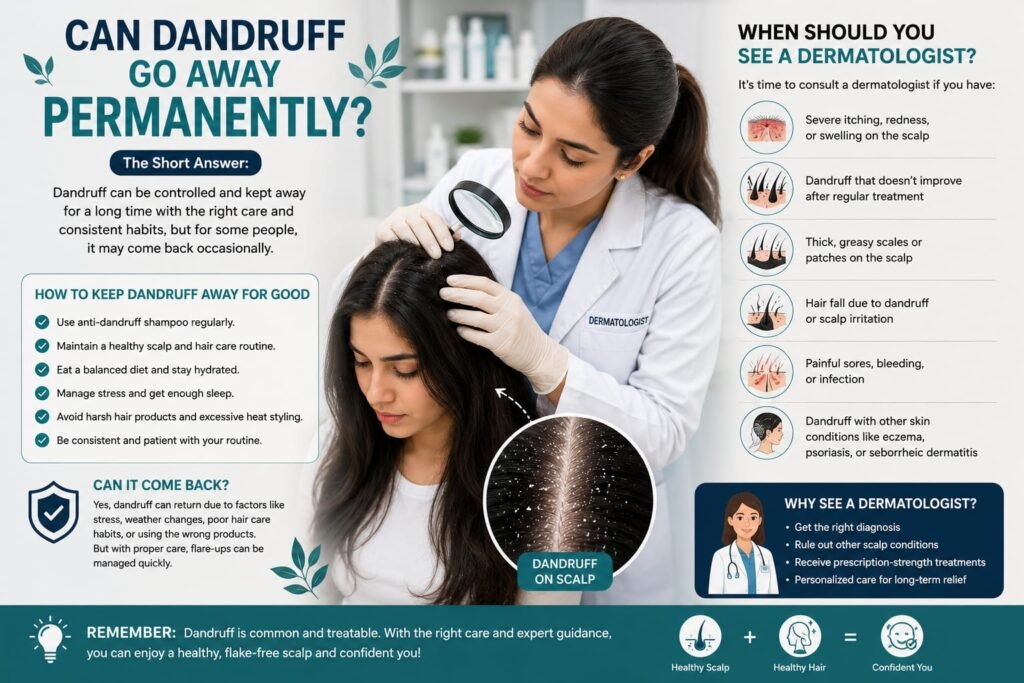
Dandruff can often be controlled successfully, but it may come back from time to time.
Some people notice that their scalp is clear for weeks or months and then flakes return. This does not necessarily mean your routine has failed.
Once your dandruff improves, continuing a suitable maintenance routine may help prevent frequent flare-ups.
When Should You See a Dermatologist?
Mild dandruff can often be managed with regular scalp care and an appropriate anti-dandruff shampoo. However, you should consider seeing a dermatologist if:
- Your dandruff is severe or persistent.
- Your scalp is very red or swollen.
- You have painful areas.
- Your scalp is bleeding or developing sores.
- You notice significant hair loss.
- Over-the-counter dandruff treatments are not helping.
- The flakes are spreading to your face or other areas.
A dermatologist can check whether the problem is dandruff or another scalp condition and recommend the right treatment.
Simple Dandruff Hair-Care Routine
If you want to keep things simple, try this basic routine:
Step 1: Choose a suitable anti-dandruff shampoo.
Step 2: Apply it mainly to your scalp.
Step 3: Massage gently with your fingertips.
Step 4: Leave the product on for the recommended time if the instructions say to do so.
Step 5: Rinse thoroughly with lukewarm water.
Step 6: Use conditioner mainly on your hair lengths if needed.
Step 7: Avoid excessive scratching and heavy product buildup.
Consistency is more important than having a shelf full of hair products.
Conclusion
If you are wondering how to get rid of dandruff in your hair, start with the basics. Keep your scalp clean, choose an appropriate anti-dandruff shampoo, avoid scratching, reduce product buildup, and follow a consistent routine.
You do not need to try every tip at once. Start with a few simple changes and see how your scalp responds.
At Beauty Lux Hub, we believe that healthy-looking hair starts with a healthy scalp. And remember, if dandruff is severe, painful, or does not improve with regular care, getting professional advice is the best choice.
Frequently Asked Questions
Can I get rid of dandruff naturally?
Some gentle habits, such as regular washing, avoiding scalp irritation, and maintaining a healthy lifestyle, may help manage flakes. However, home remedies are not always enough for persistent dandruff. Evidence for many popular DIY remedies is limited, so be careful with ingredients that can irritate the scalp.
How long does it take to get rid of dandruff?
It depends on the cause and treatment. Some people notice improvement within a few washes, while others need longer or different treatment. Follow the instructions for your dandruff shampoo and stay consistent.
Is dandruff caused by poor hygiene?
Not necessarily. Dandruff is a common scalp condition and is not simply a sign that someone does not wash their hair. However, regular cleansing can help control oil and buildup.
Should I oil my scalp if I have dandruff?
It depends on your scalp. Heavy oils may not be helpful for everyone, especially if your dandruff is associated with an oily scalp. If oil seems to make your flakes worse, avoid applying it directly to your scalp.
Can dandruff cause hair loss?
Dandruff itself does not usually cause permanent hair loss. However, severe itching and scratching can damage the scalp and contribute to temporary shedding or breakage. If you are experiencing noticeable hair loss, speak with a dermatologist.